Inner Space

BBC News looks at the psychology of portable music players, the significance of the aura or bubble that surrounds one the moment the music starts, and why it’s so appealing. A key point is that headphones in part allow one to regain control of the senses – the world represents a bombardment of visual and sonic messages, and by replacing the sonic shell, you in part get to choose your sensual world, rather than moving through the one the world chooses for you.

I didn’t start wearing a music player until my late 30s, and remember the experience being very different than expected at first – it wasn’t just fun to listen to music – the iPod literally changed the way I felt in the environment. It was almost too much. The experience feels much more normal to me now.

More:

Some women use earphones to deflect unwanted attention, finding it easier to avoid responding because they look already occupied. In the same way, removing earphones when talking to someone sends a strong message about how interested one is in what is being said. It pays the speaker a compliment.

Music: Gong :: Master Builder

Song for Spring

Is it spring yet? Sure feels like it. Camelias are blooming like crazy, Amy planting up a storm, I fertilized the lawn with Scott’s Turf Builder (amazing stuff!).

For no particular reason, in the mood to celebrate with Jimmy Webb’s glorious lyrics to “MacArthur Park” (made famous by Richard Harris, Donna Summer, Frank Sinatra, take your pick). Who today writes lyrics this good?

I recall the yellow cotton dress
Foaming like a wave
On the ground around your knees
The birds, like tender babies in your hands
And the old men playing checkers by the trees

MacArthur Park is melting in the dark
All the sweet, green icing flowing down
Someone left a cake out in the rain
I don’t think that I can take it
‘Cause it took so long to bake it
And I’ll never have that recipe again
Oh, no!

I think The Polyphonic Spree should cover MacArthur Park.

Music: The Fall :: Dog Is Life/Jerusalem

Subtropics

Friend from many-moons-ago Kabir Carter is helping to open Miami’s Subtropics music festival by performing a real-time moblogging project from New York.

Walking in the city (or elsewhere), sounds are heard and recorded without employing the subjective and limiting filter of conventional, transducer based sound recording technology.

So he’s describing sounds in text rather than laying them down magnetically, posting aural impressions from the field, without sound. For the opening, they set up a projector in a space in Miami and showed the posts. Sample results:

SFX #75
SFX: Folding Subway Seat Recoiling

SFX #73
SFX: Over Twenty Trash Bags Buffeted by Breeze

SFX #56
SFX: Sliced Potatoes Frying in Oil Filled Vat

SFX #40
SFX: Three Helium Filled Ballons Rubbing against Corrugated Metal Scaffolding

Music: The Kinks :: Alcohol

Privacy Matters

Having an interesting discussion with a friend about issues surrounding online privacy and corporate tracking of customers. At issue is whether some forms of customer tracking are acceptable, or none. If a company you like and have done business with in the past sends you an email, do you expect that clicking links in that email will report that you, Jane Doe, responded to an email campaign, visited the such and such pages, and bought such and such products? (Keep in mind that this is not spam, but an email newsletter you really did sign up for). If you didn’t know you were being tracked, would it bother you to find out that you were? What about non-personal, generic stats tracking, which just gathers average results to see what people do and don’t like? What if you found out that the company’s services could become much more valuable to you if they could gather personal usage data on your surfing and buying habits? How valuable is your personal privacy? For which kinds of rewards would you be willing to give it up? How clear should a company be that they’re tracking you? Is the fine print in the EULA or TOS sufficient, or should tracking notices be posted in boldface on the page where you sign up? Can privacy lost ever be regained?

How do you feel about companies tracking your personal surfing/purchasing habits?

View Results

Music: Neil Young :: Loose Change

tinywords

To lead a fulfilling life, one needs haiku beamed to one’s cell phone daily. Birdhouse is proud to host tinywords.com, home of a mailing list that takes advantage of the limited text capabilities of cell phones’ SMS-email gateway capabilities — haiku are perfectly suited for the size constraint. Of course you don’t need an SMS phone to sign up – any email address will work.

tinywords is the brainchild of writer and Mobile PC Magazine executive editor Dylan Tweney, whose weblog is also hosted here.

Music: Altai Hangai :: Mandukhai Khatan

Windows greps

Amazing results of grep searches through recently surfaced (partial) Windows source code. Of special note: References to Windows users and other MS programmers as “idiots,” open acknowledgment of lots of “ugly hacks” and “dangerous” bugs and of certain functions being “total bullsh*t.”

Music: The Kinks :: Where Are They Now?

Urban Freeflow

traceurFascinated by a new urban sport (perhaps sport is too controlled a word?) called Le Parkour, aka Park-Core, aka free running, aka Urban Freeflow. The idea is simply to move the human body through the environment as quickly and as fluidly as possible. There are good videos all over the net, although I’ve never seen so many 404s, slow servers and broken footage – must be something about the laissez faire atmosphere of the activity. Most of what you see is like skateboarders without the boards – 20-something men bouncing off walls, slithering under obstacles, doing hand plants from tall rails. I’m looking forward to seeing the art form mature, for Jackie Chan-like style and grace to become part of the improvisation. For someone to take it to a more Zen-like level, as opposed to the hardcore headspace of the skate crowd.

Update: See also House Gymnastics

Music: Koop :: Soul For Sahib

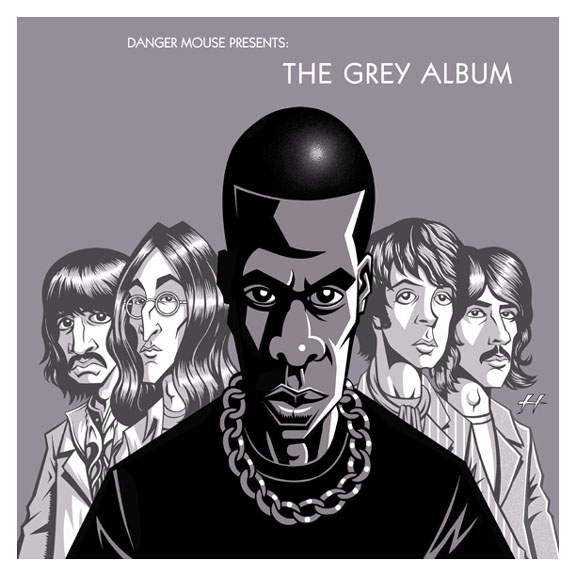
Thoughts on The Grey Album

GreyAlbum DJ Danger Mouse’s The Grey Album has been on my iPod for a week now, and I’m still feeling conflicted by it. In case you’ve missed the story, executive summary: DJ Danger Mouse has taken Jay-Z’s “The Black Album” and remixed it with samples from the Beatles “White Album.” The results are brilliant, frustrating, obnoxious, beautiful, and an insult to the legacy of the Beatles (though ironically, probably intended as a tribute). If you haven’t heard it, download mirrors are all over the place. And EMI is dispensing cease-and-desist letters like Pez.

Looking at The Grey Album from three angles:

1) As a concept and a piece of technical wizardry
2) As a challenge to copyright law
3) As a piece of artwork

1) Technically, the Grey Album is a remixological wonder. Danger Mouse is a whiz. It’s a trip to hear such familiar strains hashed and rehashed and whipped up and layered back down with this kind of slick wrist expertise. It’s like there was an explosion at the LP factory and somehow all these disparate parts came back down to earth magically hanging together — all wrong, but still somehow totally in sync. While there are long-ish excerpts from The White Album, most of the Beatles you get here are new beats created by twisting and tangling and untangling snippets from familiar songs. Listening to this stuff, half my attention is busy marvelling at Danger Mouse’s skills.

2) It’s funny how this case overlaps with the Ken Light Kerry/Fonda case that’s been front and center for me at work lately – both involve two works by different creators being remixed by a 3rd party. In Light’s case, lawyers are trying to determine whether newspapers can run the composite/collaged image copyright-free or whether royalties are due. Striking parallels to the Danger Mouse project.

Last Tuesday, thousands of web sites mirrored copies of The Gray Album in an all-day protest called Grey Tuesday, the idea being that if enough people participated in the protest, they’d all get away with it. The Electronic Frontier Foundation has posted comments on the legal position of Grey Tuesday participants.

Napsterization wonders what your rights are “if you own the two albums outright already, and simply want the blended version, remixed?” Great question.

At Corante, Ernie Miller wonders whether some kind of remix formula or recipe could be created to allow consumers to recreate the Dangermouse mix from the two original sources, thus sidestepping copyright issues. I respond that the suggestion is similar to the technique used to distribute the lame MP3 encoder, thus bypassing Fraunhofer’s patent. But music is not a computer program, and I am highly doubtful that sufficient notation could be devised, or that anyone could enter in the data in sufficient detail to recreate the artwork.

3) No matter how marvelous the mix or how interesting the copyright questions, you’re still left with a work of art that somehow has to stand on its own, despite leaning so completely on the work of others. Bottom line: Is it a good record? Well, I’ve been listening to it for days, so it must not be a total abomination. But for the most part, I keep listening because I’m fascinated, not because I think it’s a particularly good record. I’m not much of a rap fan to begin with, and Jay-Z’s style doesn’t do much of anything to goose my predilections. As rappers go, his delivery is bland and his lyrics mediocre. It’s not all gangsta, but there’s way too much of this kind of crap (from various tracks):

All my wimmin get tennis bracelets…
Used to deal snowflake by the O.Z….
I like big-body Benzes…
Stay away from ho’s…
I got 99 problems but the bitch ain’t one…

So you get this amazing mix experiment, all these great old Beatles riffs chopped up tossed up chunked up in cruel and unusual (and very cool) ways, all colliding bizarrely with this semi-gangsta crap. The result is as depressing as it is amazing.

Yes, many of the lyrics are better than the ones I quoted, but bottom line is that Jay-Z’s rap is not worthy of The Beatles backing music (even remixed). In fact, it creates the opposite effect: You get the feeling that one of the greatest records of all time by one of the greatest groups of all time has just had mud ladled all over it. You hear these old Beatles samples, and those lyrics start running through your head. Then Jay-Z starts up with his juvenile patter and you just feel kind of robbed. Listening, I go back and forth between digging this whole crazy messed-up adventure on one hand, and feeling like a great chapter in human creativity has been totally desecrated on the other.

My favorite lyric on the album:

“And if you can’t respect that
your whole perspective is whack,
maybe you’ll love me
when I fade to black.”

Well, maybe. I like what Danger Mouse is trying to do from an experimental POV, I like the way he’s challenging copyright, I dig the beats, I enjoy hearing the Beatles in a totally new vein, but the rap pretty much cancels out any positive net effect. Not entirely, but pretty much. All told, I guess I just feel kind of grey about it.


Music: Jay-Z + DJ Danger Mouse :: Moment of Clarity

Vermin Supreme

When I was living in Boston a bunch of years ago, friend Pagan Kennedy used to implore me to get down to the protests where Vermin Supreme was hanging out. Now she is digging his shpiel in the Boston Globe.

What do we want?” “Peace,” the crowd answered. “What do we want?” the guy screamed again. “Peace!” Now the river of people roared the word. The sound boomed through my chest. No one was laughing. “What do we want?” the guy demanded again. And this time, Supreme pointed his megaphone at the sky. “A pony!” he screamed, his amplified voice rising over the roar. Next time around, pretty much everyone in the crowd had defected to Supreme’s chant. “What do we want?” “A pony,” hundreds of people hooted. Some young women near me bobbed up and down. “A pony, a pony,” they squealed.

Music: Anthony Braxton :: No. 300