Truth About a Mondegreen

I’ve long acknowledged on The Archive of Misheard Lyrics that Hendrix sometimes played around with the lyrics to “Purple Haze,” and actually did sometimes sing “‘Scuse me, while I kiss this guy” rather than “…kiss the sky.” The site is probably not actually named after one of the world’s most commonly misheard lyrics at all, since the domain name isn’t technically an example of a mondegreen if the singer sometimes sung it that way on purpose.

A reader recently submitted a brief video clip showing Jimi doing just that. What’s cooler than proof?

Music: Bob Dylan :: I Was Young When I Left Home

Sample Trolls

Great piece at Slate on the damage being done to the music industry by sample trolls – companies that obtain rights (often under dubious circumstances) to an artists’ catalog and then go trolling for samples of that work embedded in other artists’ work. When they find samples – no matter how brief or how recognizable – they sue the hell out of ’em. The lawsuits are often won because of a decision once reached by the 6th Circuit court:

There’s only one appellate court, the 6th Circuit, that takes the ridiculous position that any sample, no matter how minimal, needs a license. Most copyright scholars think the decision is both activist and bogus.

A sample troll called Bridgeport is a one-man company with no holdings other than music rights, who basically stole the rights to the George Clinton catalog and then launched an assault to find every example of sampled Clinton music, however trivial. That’s kind of like suing everyone who’s ever quoted Shakespeare — and Bridgeport has made millions doing it. If trolls like Bridgeport had been around when Public Enemy was making It Takes a Nation of Millions to Hold Us Back (which includes thousands of samples in a single album), it would have cost millions of dollars to secure all the necessary rights.

What, if anything, can be done? In the big picture, copyright must continually work to ensure that the basic building blocks of creativity are available to artists and creators, especially as new forms of art emerge. We already know what this means for novelists: freedom to use facts, borrow stock characters (like Falstaff) and standard plots (the murder mystery). For filmmakers, it means the freedom to copy standard shots (like The Magnificent Seven’s “establishment shot”). For rap music, it means the freedom to sample. Rap’s constant reinvention and remixing of old sounds makes it what it is; now is the time for the copyright system to get that. Vibrant cultures borrow, remix and recast. Static cultures die.

Even sadder than the fact that parasites like Bridgeport are allowed to hide behind the law is the fact that Congress could put an end to the practice with the enactment of a single law declaring some small threshold of legal sampling length – say, 7 seconds. “With a single line of code, Congress can make this problem go away.”

Music: Bill Withers :: Grandma’s Hands

iPod Owners: Just Thieves

Flash back to the cassette tax of the 80s, when labels assumed that the vast majority of blank cassettes would be purchased to pirate music, and were able to push legislation forcing cassette manufacturers to share proceeds with the labels. Now flash forward to the present:

Universal Music Group refused to license its music to the Zune unless it could receive a percentage of each device sold, in addition to standard music licensing fees for downloads and subscriptions. “These devices are just repositories for stolen music, and they all know it,” UMG chairman/CEO Doug Morris says. “So it’s time to get paid for it.”

In practical or percentage terms, UMG is not entirely wrong – of course most iPods carry pirated content. It’s the presumption of guilt that galls me. In addition to pirated content, iPods/Zunes etc. also carry a huge honkin’ ton of A) Music ripped from people’s own CD collections, B) Music purchased from services like eMusic, iTMS, Rhapsody, etc., C) Podcasts, D) Music provided for free download by bands on MySpace etc. In fact, I’d wager that a much higher percentage of content on the average iPod is legitimate than was on the average cassette tape.

Taken as a whole, that’s a helluva lot of legitimate content, and a whole lot of people being tarred/taxed unfairly with the “pirate” flag.

Music: Brian Eno And John Cale :: Crime In The Desert

The Devil and Daniel Johnston

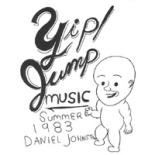
Yipjump Just finished watching the 2005 documentary The Devil and Daniel Johnston, which has left me feeling both limp and elated. Johnson is a manic depressive singer/songwriter with delusions of grandeur, who has grappled with downward spirals and dangerous encounters throughout his life. His songs are simple and raw, but emotionally complex, sometimes naive, sometimes overflowing with religious fervor, the purest of love (mostly for a girl he was obsessed with 20 years ago). Every song in his catalog of 20+ cassettes is absolutely raw. His drawings and cartoons are as strange and amazing as his music.

In the mid-80s, Johnston became a favorite of the alt-rock scene, and he worked (loosely) with Sonic Youth, Half Japanese’s Jad Fair, Yo La Tengo, Mike Watt, and others. His involvement with the Butthole Surfers ended strangely after the already tottering Johnston ingested LSD at a Surfers show and met the devil head-on. It’s implied that the trip sparked his religious obsessiveness, and that he never quite recovered (Gibby Haynes is interviewed for the film while having his teeth drilled by a dentist). Later in the film, Johnston refuses a bountiful recording contract with Atlantic Records because Metallica is also on the label, and Johnston is convinced the band will beat him up.

In an interview with his parents, Johnston’s father describes how his reading of a Casper the Friendly Ghost comic book led to him taking over their self-piloted airplane and crashing them into the woods. They barely escaped with their lives, but in Daniel’s mind, they became heroes in the Lord’s service. It’s all so fragile and frightening and weird.

Johnston has filmed and taped obsessively since he was very young, and the documentary milks the resulting library of self-recorded material in such a way that you feel incredibly close to his life – and his life’s work.

All of Johnston’s self-released cassettes are available on eMusic.

Hi How Are You
The Daniel Johnson mural on Guadalupe in Austin, TX. Click for larger version.

Music: Daniel Johnston :: Never Relaxed

Devo Live

Miles Flowerpot Posted back in June about the fact that Devo are touring again. Embarrassing or not, knew I had to get me a slice of that goodie good good Jocko spud gravy. Went with Roger last night to see how the Boojie Boys sounded in their mid-40s / early 50s. Missed start of the show, but arrived in time to hear Smart Patrol / Mr. DNA, Wiggly World, and a few other choice “Duty Now for the Future”-era bits. They weren’t exactly spastic (one could call that a necessary condition for true de-vo), but neither was it the slightest bit lazy, sad, riding-the-coat-tails-of-the-past pathetic. A big chunk of the Devo catalog has real lasting value, and manages not to sound dated (either that or my ears haven’t evolved). And yes, it rocked.

Above: With absolutely no prodding from me, Miles arrives independently at the idea that flowerpots make great hats.

Music: Cab Calloway :: Boog It

More Zorn

Roger says the Colbert on Zorn piece is his second-favorite Zorn item of all time. First? SF Weekly:

On May 15, 1997, out-there experimental saxophonist John Zorn was in the middle of a set at New York City jazz spot the Knitting Factory when he abruptly stopped. He proceeded to chew out a group of patrons in the balcony who, in a fit of impropriety, were talking loudly over his skronk-jazz stylings. “You up there,” he snapped angrily. “Shut the f*** up and listen to the music.” The chatterboxes at fault? Czech Republic President Vaclav Havel and his wife Dagmar, Secretary of State Madeleine Albright, Lou Reed, and Reed’s girlfriend Laurie Anderson.

Nevermind Zorn for a minute. What are Havel, Albright, Reed and Anderson doing in a balcony together? Picturing this gives me hope for the world (though it was nearly a decade ago).

Music: Miriam Makeba :: Touré Barika

Everything Louder Than Everything Else

Back in January 2004, Wired ran a piece on how the average volume level of commercial CDs has been steadily rising for the past two decades (Pump Up the Volume). Check out the visual waveforms on that page comparing AC/DC’s 1980 “Back in Black” to Celine Dion’s 2003 “I Drove all Night.” Amazing difference.

Compression is the act of reducing dynamic range during the mastering stage. Rather than making the overall volume louder, the loud/quiet peaks and valleys are brought closer together so there’s less delta in the waveform. The result is that the average volume is greater, even though the loudest sounds aren’t louder (though engineers do push the total volume to the max — at customer insistence — as well). Just as TV commercials seem louder than normal programming — their average volumes are higher, even though peak loudness is not.

In the days of LPs, pushing recorded volumes too far could result in the needle jumping out of the groove, and pressing plants would reject recordings that included clipping artifacts. After the advent of the CD, the needle problem went away. Artists quickly realized that louder overall volumes made a bigger impression on listeners … so louder music had a higher chance of becoming a hit. But despite the “impact” that louder music makes, the ultimate result for listeners is fatigue. Human auditory perception just wasn’t designed to listen to sound bereft of dynamic range.

Today, audio engineers are “exhausted” from trying to resist clients who insist on high compression levels. Either they do it, or the artist goes to an engineer who will. What’s unusual is that the vice president of a major label (Angelo Montrone of A&R) recently wrote an embattled plea to an industry newsletter, basically asking engineers to stop the madness.

Austin 360’s Everything Louder Than Everything Else summarizes the letter and provides an excellent overview of compression and its effect on humans. What I found particularly interesting was this cultural theory on why huge compression has become the norm:

So why aren’t more people noticing this sort of thing? One word: lifestyle. We listen to music in completely different ways than we did 20 or 30 years ago. For most people, music is listened to on the go, in cars, on headphones while running, on computers at work. Music has to compete with the sound of your car’s engine, has to punch through the background noise of street traffic or a loud office. “Ours is a culture of competition,” Wofford says. “Maybe labels think the music has to be super aggressive, super bright, like a kid screaming in a supermarket, to get your attention.”

via grahams

Music: The Mountain Goats :: Maybe Sprout Wings

Ukes for Troops

Uke Players Ramadi Iraq Best sounds to come out of Iraq in a long time: Ukulele-playing Marines. Thanks to world-wide donations to Uke Jackson’s Ukes for Troops campaign, 15 ukuleles have already been delivered to marine bands stationed overseas. “In little corners all across Fallujah and Habbaniyah, Marines are plucking the sing-song strains of the South Pacific.”

“When I first opened the box, I asked myself, ‘What are these things doing in Iraq?’” said Gunnery Sgt. Jay D. Dalberg, a euphonium and electric bass player … “These are usually related to tropical beaches like Hawaii, not Fallujah, Iraq.”

George Harrison writes in the intro to one of my uke songbooks: “Some are made of wood and some are made out of armadillos – everyone I know who plays one is crackers.”

Music: The Beach Boys :: I Just Wasn’t Made For These Times