
At the risk of participating in the echo chamber, Apple unveiled a preview of OS X Leopard at WWDC today. Not attending this year, but looks like a fairly substantial release. Following on BeOS / X-Windows heels, Spaces finally gives the Mac a version of Workspaces. No mention yet on how many you can have, and little info on how they’re navigated, but it’s certainly an improvement over nothing at all (though I confess I stopped missing them sooner than I thought I would when switching from BeOS to OS X).
Very cool stuff on extending iChat for collaboration with desktop applications (though I can imagine some scary security issues here when a remote user convinces you that they’re your sysadmin “just need access for a few minutes” — wondering what the security model for this will be.
Time Machine uses built-in version control to let you rewind to previous versions of the file system, undelete long-gone images, etc. Nifty but not earth shaking. A feature probably growing out of awareness that most users are utilizing maybe 10 or 20% of today’s gi-normous hard drives. [Addendum: Turns out you need to have a 2nd hard drive installed to use Time Machine, a fact which will relegate the feature to use only by the hard-core, and perhaps some institutional implementations. Would like to see Apple offer a non-destructive partitioning scheme, so users could not only take advantage of Time Machine but also do all kinds of other things, like set up Boot Camp or other VM without starting from scratch.]
Since I like to imagine that someone is actually listening on the other end of the OS X Feedback form, I’m stoked to see the addition of a stationery feature to Mail.app — I wrote Apple about a year ago saying that stationery was the one killer feature in Eudora that no other mail client had seemed to grok (though I don’t care about fancy mail formatting, I always found the ability to craft boilerplate responses I could call up instantly an invaluable feature in Eudora). The macslash.org take on stationery is that they’re going to make it even easier to send “craptastic HTML email.” Which is probably true, as unfortunate side effects go.
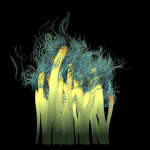 Romanian-born computer artist Alex Dragulescu turns crap into gold — he’s developed a computational analysis system to transform ordinary spam into renderings of