Had so much fun playing Mad Libs as a child , diving headlong into surrealism and humor while learning the parts of speech. Thrilled to see Miles getting into Mad Libs now – we’re having a gas learning to tell our adverbs from our plural nouns. Loved the Nixon and other old-school political references in this one he completed today:
Ladies and gentlemen, on this sleepy occasion, it is a privilege to address such a gassy looking group of birds. I can tell from your smilingcars that you will support my sassy program in the coming election. I promise that, if elected, there will be a mirror in every toothpaste and two leaves in every garage. I want to warn you against my stinky opponent Mr. Miles. The man is a coolshoe. He has a boastful character and is working vent in glove with the criminal element. If elected, I promise to eliminate vice. I will keep the sea turtles off the city streets. I will keep crooks from dipping their pencils in the public till. I promise you rainy government, clean taxes, and runny schools.
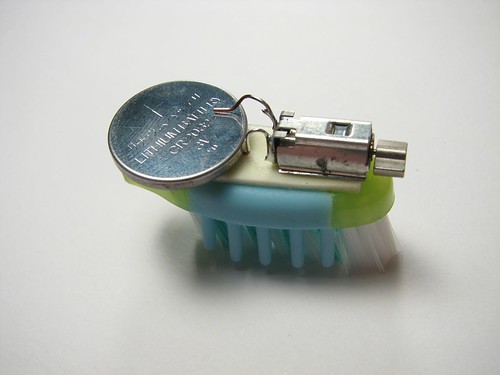
A year ago, Miles and I made our first Bristlebot – a small robot made from a toothbrush head, hearing aid battery, and the vibrating motor from a cell phone – which skitters around on flat surfaces in chaotic patterns.
The experiment didn’t end well – Miles grabbed a hot soldering iron by the shaft when I wasn’t looking and we had to segue into burn control. When that subsided, we had great fun racing the bot across the floor.
I just volunteered to help his entire second/third grade classroom build their own bristlebots this April. We’ll also try a variant with mint tins and paper clip legs. We plan to build a “sumo” ring they can push each other out of, and may also try our hand at bristlebot painting:
Enjoying my sixth annual pilgrimage to Austin, TX for South by Southwest Interactive, 2011. Once again, I’m renting a bike from Barton Springs Bikes – fantastic way to get around, especially now that the conference is much larger and more spread out. It actually makes it feasible to attend sessions 10 blocks away, given the 30 minute break between sessions. Unfortunately, the excellent mountain bike they gave me was stolen from in front of the hotel on Saturday night – cable lock clipped. They cheerfully delivered a replacement bike to me later the same day. Since my hotel is right on the river, I’ve got the luxury of riding all the way to the convention center along Ladybird Lake (which is actually a reservoir that “flows” through town). Weather was high-70s/low-80s all week – shorts weather in March, so lovely!
As soon as I arrived, rented a kayak and spent a couple of hours boating around on the “lake.” Next day, had a few hours before sessions started and went bicycle geocaching along the water. Frabjous day! You’ll find my photos on Flickr or by following @shacker on Instagram.
Ate lots of great Texas BBQ and TexMex (thanks Chuy’s, Stubbs, and IronWorks). Didn’t do a lot of partying, but did manage to squeeze in a visit to the Museum of the Weird, where I got to see a woman drive a 30-penny nail straight into her nose (a move called “The Blockhead”). And of course my annual pilgrimage to Tears of Joy hot sauce shop – had another box of excellent sauces shipped home. Was treated to an evening of hilarious comedy with John Oliver of the Daily Show (and four others, each more funny than the last). Met tons of cool people, got my brain filled with inspirational and challenging new ideas, and ran myself ragged. Halfway through, gave up trying to stay caught up with email or anything going on back home, though we were very much aware of the earthquake/tsunami disaster going on in Japan – it was very strange to try and stay focused on the conference while that was happening. The enormity of it is still sinking in. There were many disaster-relief fundraising efforts going on during the conference, and SXSW did what it could to pull together and help.
Spent most of the week attending dozens of sessions on interactive media and taking notes, which I’ve posted here as “Loose Notes” and have tagged here at Birdhouse under #sxsw2011 (though that link won’t get you to all of them – pagination is currently broken, sorry). While every session had something useful to offer, some are obviously better than others. If I had to pick a favorite, I’d give the honors to Jeff Jarvis’ amazing talk Let’s Get Naked: Benefits Of Publicness V. Privacy, which crystallized a lot of the thoughts I’ve had on the public vs. the private vs. semi-private web over the past year. The other big one for me was Jane McGonagil’s talk Reality is Broken: Why Games Make Us Better, which challenged a lot of my notions about the effect of gaming on kids’ minds, and its potential benefits to education and to improving the world. Truly inspirational.
As for hands-on sessions, the most inspirational/useful was Creative JavaScript and HTML(5) Visual Effects – a double-long session that gave us a great hands-on intro to doing particle animation, movement, shading, and WebGL in the HTML5 canvas tag. That’s not to detract from any of the other sessions – check the links below for lots of juicy stuff.
If I had one complaint about the conference organization, it would be the fact that it was so spread out. In part, this was necessary, since there were more than 19,000 attendees this year – more than could fit in a single convention center. But the trek to some of the remote hotels was a barrier for many people. In addition, it ghettoized some topics unnecessarily. For example, all of the Future of Journalism sessions were at the Sheraton, 10 blocks away from the Convention Center. If anyone could benefit from being mixed in with all of the geeks, it’s journalists. I get why multiple venues are needed, but would have liked to have seen the topics mixed up across venues, not split up.
A handful of misc images taken from in and around Austin throughout the week:
To view larger, or with full captions, check out the Flickr set.
In this visionary talk, Blake Mycoskie shows you how to succeed in a new era of relentless competition and heightened social awareness. Why is philanthropy your best competitive advantage? How do you make money and do good simultaneously? How are the two acts intertwined? At TOMS — a self-sustaining, for-profit company — the act of giving is the cornerstone of its business model, integral to its financial success. In a behind-the-scenes look at how it all works, Mycoskie shares counterintuitive ideas (“In tough times, give more!”) that you can apply to your own business. His bold, winning strategies are proven, and have been talked about by Bill Clinton, the Obama administration, and the hundreds of thousands of customers that have joined the TOMS Movement by buying a pair of shoes. Inspired, inspiring and most of all practical, Mycoskie presents a new direction for business, offering TOMS as his prime case study. After hearing him speak, you too will know why giving just makes sense.
Dreamweaver used to be criticized for “black box” code management. Adobe made great strides in improving the situation and keeping code hand-editable. But as the web becomes more complex and we need to deal with more technologies and target more screen sizes, the need for a system to manage a complex code base becomes greater. Dreamweaver has evolved to meet the challenge. I only stayed for the first half of the session. Continue reading “Adobe’s Tooling for jQuery and the Mobile Web”
Information overload is less about having too much information and more about not having the right tools and techniques to filter and process information to find the pieces that are most relevant for you. This presentation will focus on showing you a variety of tips and techniques to get you started down the path of looking at RSS feeds in a completely different light. The default RSS feeds generated by your favorite blog or website are just a starting point waiting to be hacked and manipulated to serve your needs. Most people read RSS feeds, but few people take the time to go one step further to hack on those RSS feeds to find only the most interesting posts. I combine tools like Yahoo Pipes, BackTweets, PostRank and more with some simple API calls to be able to find what I need while automatically discarding the rest. You start with one or more RSS feeds and then feed those results into other services to gather more information that can be used to further filter or process the results. This process is easier than it sounds once you learn a few simple tools and techniques, and no “real†programming experience is required to get started. This session will show you some tips and tricks to get you started down the path of hacking your RSS feeds.
I saw a lot of inspiring stuff at SXSW this year, but Jarvis’ talk was by far the most fascinating. The internet has plenty of privacy advocates (most of them fear-mongers), but very few public-ness advocates. Jarvis made a compelling case of the critical function of public dialog and against over-use of private or semi-private “walled gardens” like the ones found on Facebook. Jarvis is not opposed to privacy, but he sees it becoming the default position for so much of what we do online, and the internet suffering because of it.
I personally have a lot of similar feelings, but Jarvis articulated them in ways I never could. Planning to read his book soon.
Author of “What Would Google Do?” and the upcoming “Public Parts: The price of privacy, the value of publicness.” Directs the Tow-Knight Center for Entrepreneurial Journalism at the City University of New York Graduate School of Journalism. Blogs at Buzzmachine.com
Love creative problem solving, but need something more practical–something specific to User Experience? Russ and Christina will share with you the exercises they use to solve the REAL problems. You’ll flex your critical thinking muscle through a series of jumpstarter activities. Even better, attendees will be encouraged to participate, if not embarrass themselves in front of a room full of their peers as they challenge themselves to see past the first, obvious–and often incorrect–answers, and start to flip problems on their heads to see solutions from a different view.
Over the last year, NPR’s total page view growth has increased by more than 80%. How did we get that much growth? Our API. The NPR API went live to the public in July 2008 and was designed with the philosophy of Create Once, Publish Everywhere (COPE). Through COPE, NPR has been able to quickly and efficiently distribute content to virtually anywhere, including NPR stations, partners and the general public. The biggest impact that the API has made, however, is with our mobile strategy. The API has enabled NPR product owners to build specialized apps on a wide range of platforms and devices, liberating them from being dependent on custom development to access the content. Through this process, we built our iPhone and iPad apps, mobile sites, open sourced Android app and HTML5 site, some of which were turned around in a matter of weeks! Delivering more than one billion stories a month and serving thousands of product owners, partners, stations and public users, the API has clearly become the centerpiece of the NPR’s digital media and mobile strategy. In this session, you will learn all about the guts of this mission-critical system (from a technical and business perspective), our publishing processes, our moblie strategy and other related aspects of our digital distribution approach.
Barry Diller currently serves as the Chairman of Expedia and the Chairman and Senior Executive of IAC, a leading internet company that houses more than 50 businesses including Match.com, Citysearch, The Daily Beast, Vimeo, CollegeHumour, Electus and Ask.com. Prior to founding IAC, Mr. Diller served as chief executive for a number of companies engaged in media and interactivity including ABC Entertainment, Fox, Inc., QVC, Paramount Pictures Corporation and Paramount’s Entertainment and Communications Group which included such companies as Simon & Schuster, Madison Square Garden Corporation, and SEGA Enterprises, Inc.

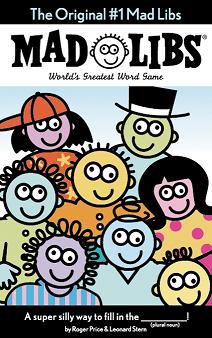 Had so much fun playing Mad Libs as a child , diving headlong into surrealism and humor while learning the parts of speech. Thrilled to see Miles getting into Mad Libs now – we’re having a gas learning to tell our adverbs from our plural nouns. Loved the Nixon and other old-school political references in this one he completed today: