After years of hearing that fresh-ground coffee tastes better than pre-ground, I finally got around to setting up a family taste test. Purchased two bags of Peet’s Major Dickison’s Dark Roast with the same expiration date (one bag ground and one whole bean), used a burr grinder to grind some of the beans to the same coarseness as the pre-ground, and did a pour-over cup of each with same water at the same temperature. I knew which one was which, but Amy and Millie did not (semi-blind test). Conclusion: None of us were able to detect much of a difference – certainly not enough to warrant the hassle of grinding beans fresh every day. Of the tiny difference notes we did come away with, one of us found the pre-ground slightly more aromatic, one of us felt that way about the whole beans, and one found no difference at all. I know a lot of people feel very passionately about this, but I remain convinced that much of it comes down to a love for the ritual (I get that!). I’m sure there are people with palettes fine enough to notice differences that we could not, but we have now conclusively decided that none of us are those people.
Beyond vs. Impossible — Fake Meat Taste Test
Used to be that Beyond meats were available in the grocery store, but you had to go to a restaurant to try Impossible Burgers. But recently I found Beyond and Impossible side-by-side in the grocery store, and bought one of each. Last night I set up a little taste comparison test for family.
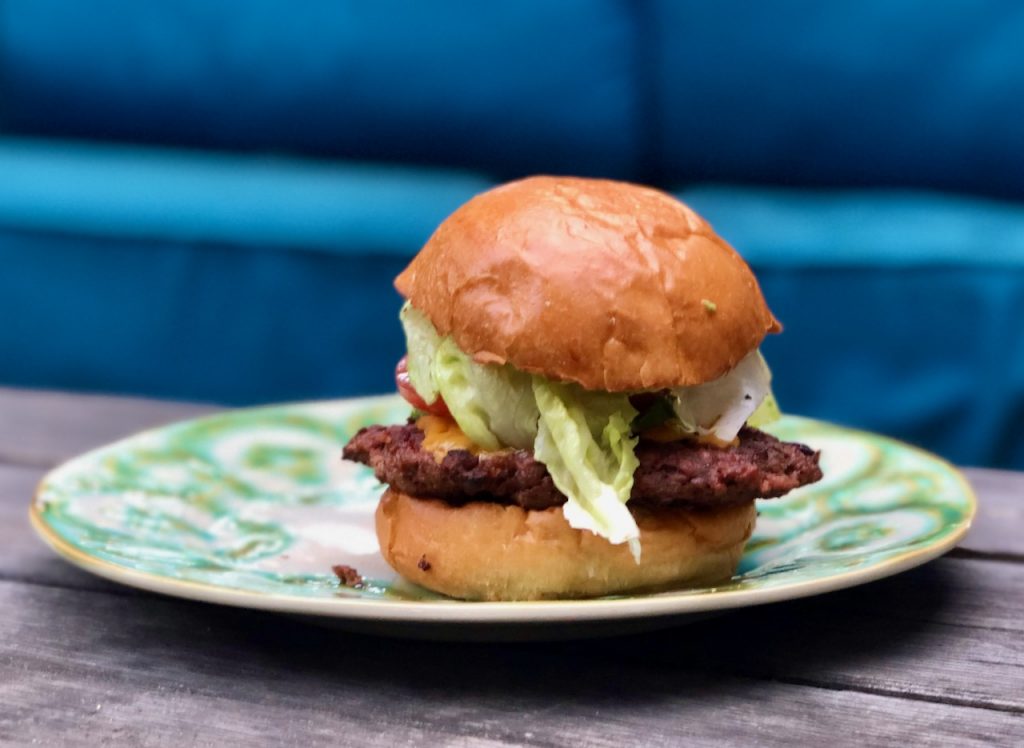
Setup: Two patties the same size. Added the same amount of salt and pepper to each, grilled them at same temperature for the same length of time (3 mins/side). We tasted them as-is: No condiments or extras to get in the way of taste.
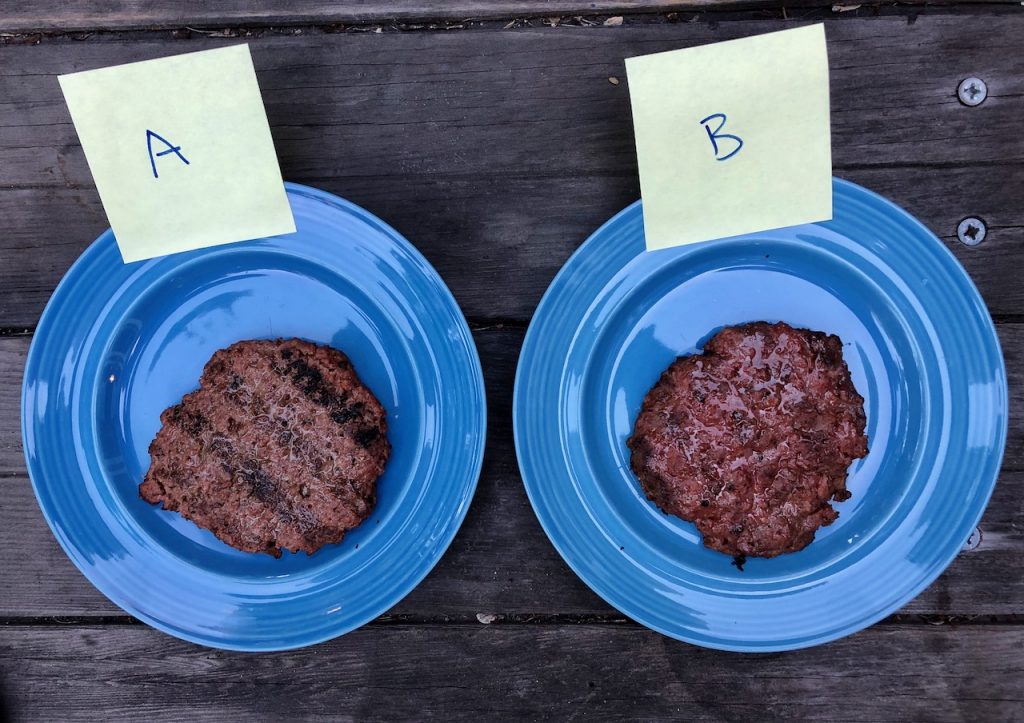
My wife and son didn’t know which patty was which. To make things fair for my own opinion, I left the room and asked them to flip a coin to decide whether to switch the labels on the plates or not.
Conclusion: We all thought Impossible was slightly sweeter, and sure enough, the label shows that it contains a bit of sugar. We all though Beyond was slightly more chewy, and sure enough, it turns out to contain a bit more fat. Impossible had a bit more native seasoning – a flavor that’s hard to put your finger on, but good. Impossible was also more reddish in color (beet juice, right?) but Beyond had a slightly more realistic taste, if that’s what you’re going for.
At the end of the sampling, we all agreed that if a store had both and they cost roughly the same, we would choose Beyond over Impossible (consensus!). We thought Beyond was more delicious by a shade, despite the fact that Impossible has more seasoning built in. But both are delicious, and it’s gotten really hard to justify the eco- and health-costs of buying hamburger meat when products like these are available.
My Drunk Kitchen
At the Knight Digital Media Center where I work, we depend on interns and assistants to accomplish a lot of what we do. We’ve had a lot of good ones over the years, but one of the best was Hannah Hart, aka Harto. Unfortunately for us, Hannah moved to NYC to become an assistant to one of the actors on 30 Rock… and to turn herself practically overnight into a minor celeb as host of her own YouTube channel, where she’s been working on the net-only cooking show My Drunk Kitchen.
MDK is recorded on a single MacBook webcam from her kitchen apartment while demonstrating cooking techniques for complicated “meals” like grilled cheese sandwiches and cookies – while getting completely and totally crocked on cheap champagne, wine, or whatever happens to be sitting around that day. Sound insane? Just you watch. It’s all about the repartee’.
Each episode starts off innocently enough, but by the time the prep is done, Hannah’s pretty much off her rocker, questioning whether anyone really knows what it means to “cream the butter” (“I’m sure they meant ‘cram’ – I’ll just cram the butter in here…”).
Hannah’s just launched her own web site, featuring all MDK episodes to date.
Back to the Land
From the New York Times blog And the Pursuit of Happiness, Maira Kalman explores the relationship between agrarian societies, fast food culture, and how “the fabric of our lives is bound in the food we eat.”
Back to the Land – Do the affluent have access to the really healthy food while the less affluent do not?
Nothing earth-shattering in what she’s saying – it’s the way she’s assembling her ideas that I love – the unusual, homespun visual presentation supports the spirit of what she’s communicating.
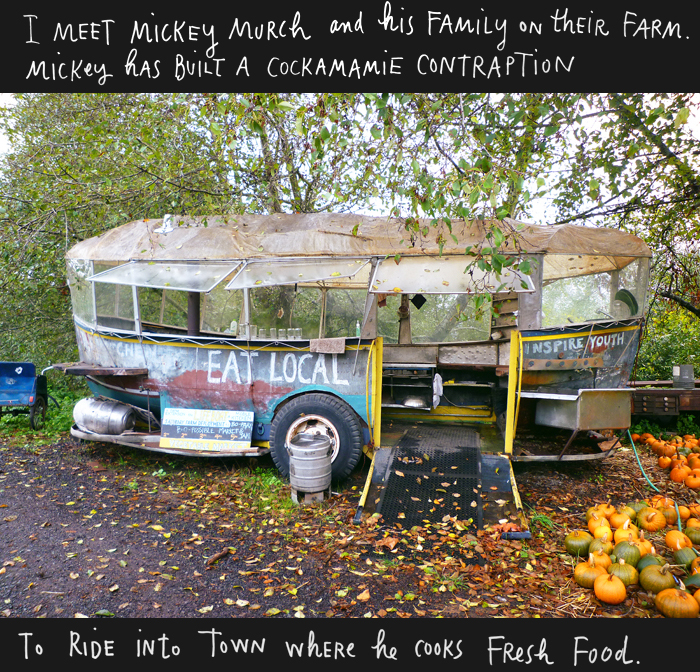
A labor-intensive way to way to blog, but that’s exactly perfect when what you’re writing about is the importance of slowing down the cultural experience, and the significance of real work by real people.
Beautiful stuff. Happy Thanksgiving everyone.
Duck Butter
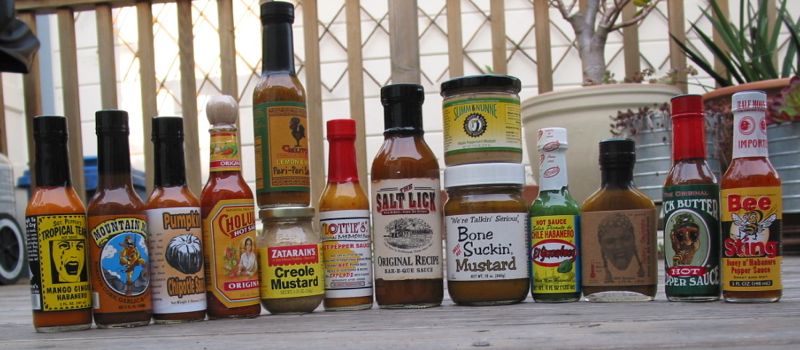
Ooooooo wEEEEE! Made my “annual” pilgrimage at SXSW to Tears of Joy Hot Sauce Shop in Austin (bottom of 6th street, across from Damn Good Tacos). Since I depleted last year’s 8-bottle shipment easily, ramped it up to 10 this time, plus an assortment of mustards (I loves me my mustards) and a bottle of Salt Lick BBQ sauce for good measure. Came home tonight to a big box full of foam peanuts and bubble wrap, which Miles and I dove into just in time for dinner (chicken sandwiches).
First up: Duck Butter. Mmmmm tasty! But too mild. Followed by Bee Sting, a honey-based habanero sauce. Totally different kind of tasty, but still on the mild side (Amy disagreed). I was looking for some real tears of joy, which I finally got with a big dollop of Lottie’s scotch bonnet elixir. Blinding sheet of pain racing up the plane of my face and I’m in heaven.
Music: Rufus Thomas :: The Preacher And The Bear
Shop the Perimeter
J-School professor and Birdhouse Hosting customer Michael Pollan, author of The Omnivore’s Dilemma, has a new book titled In Defense of Food – a common-sense manifesto for eaters. Fittingly, Pollan is blogging this month at omnivoracious.com. Don’t have time to read the book? Pollan gives away the kernel:
- Don’t eat anything your great-grandmother wouldn’t recognize as food.
- Avoid food products with more than five ingredients; with ingredients you can’t pronounce.
- Don’t eat anything that won’t eventually rot.
- Shop the perimeter of the supermarket, where the food is least processed.
- Avoid food products that make health claims.
- Eat meals and eat them only at tables. (And no, a desk is not a table.)
- Eat only until you’re 4/5 full. (An ancient Japanese injunction.)
- Pay more, eat less.
- Diversify your diet and eat wild foods when you can.
- Eat slowly, with other people whenever possible, and always with pleasure.
Music: Herbie Hancock :: Solitude
Tastebook
 A friend of the family has been involved in an interesting startup for the past few months, which just launched in beta mode today. TasteBook.com lets users pull together their favorite recipes from Epicurious.com, combine them with their own favorite recipes, and have the collection published as hardbound, fully customized recipe books. Tangible, baby.
The site looks great, and gets more Ajax-y the more you dig in. Their Flash-based book preview function is super slick. The whole site seems like a good idea that was waiting to happen, and it looks like execution is going to be superb. Congrats to the crew at TasteBook!
More at c|net, with an interesting (but lonely) comment on the question of whether recipes are covered by copyright law.
Music: Fred Anderson & Hamid Drake :: From the River to the Ocean
Buck Refills!
Standing in line with Miles for a soft pretzel at Marine World yesterday, found myself staring at big sign hawking a giant plastic bucket emblazoned with the MW logo, which one could fill with a choice of popcorn or cotton candy for a mere $7 (“Buck Refills all day!”) and thinking of Michael Pollan.
In The Omnivore’s Dilemma, Pollan describes the tricky relationship between capitalism and the food industry. You can always sell people more shoes or CDs – we just make space to accommodate them. But humans have a built-in limit to how much food we can consume. Food makers who have to satisfy shareholders’ demands on the bottom line to sell more [widgets/chalupas/corn products] every year have a tough job.
The tension between nature-limited appetites and capitalism’s need to expand, always expand, explains two things: 1) The obesity epidemic, and 2) The relentless introduction of absurd new food combinations in the drive to manufacture desire. Fast food joints re-conjure new variations on the same old limited palette of ingredients. Taco Bell sells little beyond tortillas, cheese, beans, and beef, yet manages somehow to find new ways to recombine them into Mongo Chalupas and Super Beefeater’s BurrTacos year after year. Fruit Loops Cereal Straws are drinking straws made of Fruit Loops material, lined with powdered sugar. Each suck of milk from the bowl brings a mouthful of sugared milk. When done, eat the straw. You see where I’m going with this.
The giant bucket is not a recombinant food creation – what could be more elemental than popcorn or cotton candy? The giant bucket represents the other kind of attempt to sell more food – gi-normous portions (is there a 128-ounce Coke portion available yet? If not, give it time). But it does represent an unbelievable markup on one of the cheapest food items you could possibly manufacture, with the possible exception of bottled water.
We resisted the giant bucket and enjoyed our pretzel, but the entire day at Marine World felt like equal parts pleasure and pain, this weird collision between enjoying the marvels of the deep blue sea (the people mover that carried us along the inside of a glass tube through a tank filled with sharks and sting rays was an experience of rare beauty) vs. a miasma of the most crass and offensive commercialism, not to mention the depressing weight of massive crowds, overpriced everything, and long lines for just about anything, was confusing.
Next time we either head for the tidepools ourselves or bring our own lunch (though park rules explicitly forbid this – wonder why?)
Music: The Avett Brothers :: I Would Be Sad
What the World Eats
Time is running an excellent photo essay depicting the amount of food consumed by various families in the course of a week, from 15 countries around the world.
In Chad, this family living in a refugee camp spends around $1.23 per week, mostly to make soup with fresh sheep meat.

In North Carolina, this family spends $341.98 per week on spaghetti, potatoes, sesame chicken (piles of pizza and soda also involved).
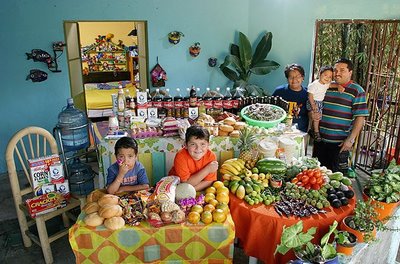
The photos are stunning, as is the variance in weekly expenditure, from the $1.23 in Chad to the $500 spent by the Bargteheide family on fried potatoes with onions, bacon and herring, fried noodles with eggs and cheese, pizza, vanilla pudding. Of course, every family is different, and there is no attempt to portray anything like a “typical” family.
The Smell of Cat Food
Miles, throwing himself an “eight-est” birthday party in the living room, blocked off the area with green masking tape strung between sofa and stereo as if it were a crime scene. After much crumbling of chocolate bunny crackers, unexpectedly announced: “No one is allowed at my birthday party who doesn’t like the smell of cat food.” With that, he led me by the hand into the kitchen, where I obliged by getting down on my hands and knees and taking a deep whiff from Plato’s bowl.
“Too rich-smelling for me,” I reported. “But I do like the smell of skunk, if it’s not too close.”
“Well, then you’re not allowed at my party. Only people who like the smell of cat food are.”
Five minutes later he relented when he needed help re-assembling a Playmobil outboard motor. Thankfully I still serve some purpose around here.