ALIPR Captchas

Captchas are so 2007. There are enough good captcha-breaking bots in the wild now that they’re pushing 10-15% success rates at decoding images, and can generate a new attempt every six seconds. Mail systems at Yahoo!, GMail and Hotmail all have been cracked in the past year. And Google’s Blogger service is under seige from spambots creating hundreds of thousands of splogs without human interaction — and they’re doing it through automated captcha cracking.

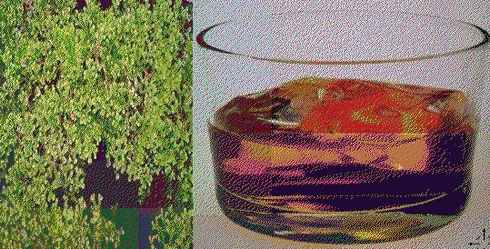
A new visual authentication system called IMAGINATION, from Penn State’s ALIPR (Automatic Linguistic Indexing of Pictures) program, takes a very different approach. Working with random images rather than characters means the pool of possibilities is not finite (image recognition is far more difficult than character recognition). And the two-part process refines the human requirement further: Find a center, then describe.

Imagination

But while traditional captchas have had problems with accessibility, ALIPR is going to be completely off-limits to the blind. Oh, and it takes up a whole screen, rather than a few hundred pixels2. That sounds like a deal-breaker right there. Or at least a deal-breaker until we get so fed up with being cracked that interaction designers are willing to give up an entire page to make it stop.

Once you solve the captcha, the site invites you to throw your best bot at it. I’m thinking maybe five years before the bots crack this one.

Music: David Byrne :: (The Gift Of Sound) Where The Sun Never Goes Down

American Trash

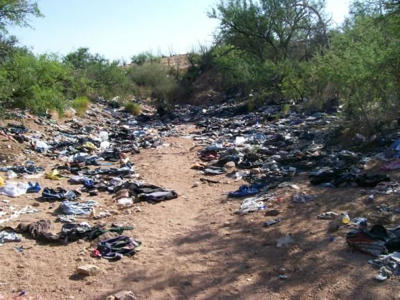
Like many people, I have a relative who sends frequent email forwards of various ill-thought-out, thinly-veiled right-wing propaganda pieces. Today’s dose came in the form of a photo screed against the piles of trash left by Mexican immigrants as they cross through the Arizona desert on their way into the U.S. Here’s the webified version of it.

Sonoran2

Usually I just let these things go without responding, but today being Earth Day, I couldn’t help myself from hitting Cmd-Shift-R, even though I didn’t know most of the people on the cc: list:

Wow, that is truly sad – breaks my heart. Almost as bad as the mess left by “real americans” after a rock concert or sporting event. “About 400 city workers hauled almost 220 tons of trash left behind by the more than 1 million people who attended the concert…”

Even as bad as the local “gully” in many Appalachian regions where the locals dump their trash. Weird thing is, those rock concert go’ers and hillbillies actually have access to trash cans – they just choose not to use them. Must be really tough to try and escape from abject poverty into a hostile nation that used to welcome the tired, the poor, the weary… without access to a trash can. I wish immigrants were more like hippies and hikers (“Pack it in, pack it out!”) or at least would put all their trash in a pile or something.

I will say this though – it’s wonderful to see right-wingers starting to care about the environment! But when you think about it, a pile of trash like that is nothing compared to the Texas-sized gyre of plastic swirling around in the Pacific ocean that all of us have created. Or any of the other seven garbage wonders of the world.

Nothing compared to the environmental impact of a nation full of SUVs and corporations that won’t stop polluting unless there’s either a profit in it or the EPA forces them to. Would be interesting to see side-by-side pictures of patches of earth fouled by, say, a Dow Chemical factory and all Mexican immigrants to have passed into the U.S. in the past decade. Seems like Americans pointing a righteous finger at immigrants for polluting is a bit hypocritical, no?

Hey, I know – let’s all fuggetaboutit and go on a shopping spree – we’ve got three trillion bucks to spend! What’s that? It’s already been spent? Ooops.

./s

Happy Earth Day everyone!

Music: Nick Lowe :: Nutted By Reality

Apache, PHP Upgrades

PHP 4 is approaching EOL, and Birdhouse Hosting, like many hosts, has been in “pause” mode on the prospect of a PHP 5 upgrade for a while, cautious of the possibility of breaking customer scripts. We’ve also been running on Apache 1.3.x since forever. But after much research, finally decided it was safe to just go for it. Spent the afternoon and early evening compiling Apache 2.2.8 and PHP 5.2.5, all required modules, tweaking handlers, and taking care of a few post-upgrade burps. Everything seems to be running smoothly, with not a single customer complaint (let us know if you find anything not working!)

Stay tuned for a revamped hosting site and a new pricing structure in the coming months.

Oak Hymenoptera Redux

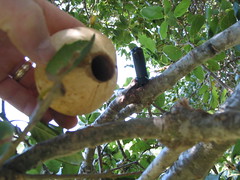
Six months ago, a certain unnamed geocache vexed and flummoxed Miles and I, and we ended up marking it DNF (15 minutes later I cut my hand wide open on barbed wire). Felt like we were so close and yet so far on that one (and it was a beautiful area), so returned to Carquinez today for a re-match. This time, we found it within three minutes, and it was a well-done doozy – a micro “Buffalo tube” tucked inside a tumorous growth on the branch of an old oak tree on a solitary hill in the middle of nowhere. Great place for a picnic, too.

Oak Hymenoptera (before) Oak Hymenoptera (after)

Miles was on a mission to photograph his Bionicles in natural settings, so spent half the day shooting macros of various Phantoka (and their off-spring) hanging from trees. If that sentence means anything to you, you have a 5-10 year-old-boy.

Snake

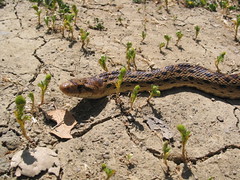
Also encountered a 4′ bull snake in the middle of the path, soaking up the sun, completely content to be petted and photographed. After a minute, it slid calmly off into the weeds.

Music: Joe Dassin :: Les Champs-Élysées

Three Trillion

Well, I got close, but no cigar. It’s painfully hard to spend three trillion dollars. Even with the Hope Diamond and the Hannah Montana Anti-static Pink Hair Brush in my cart, I was only able to spend around 80% of what the Iraq war will cost us (with veteran care costs included) by 2017. Not much info on the site on where the cost estimates for items below come from; I’m presuming they come from Stiglitz’ book:

“Just counting the zeroes on the $3 trillion price tag of the Iraq War is enough to induce hyperventilation. But what does $3 trillion really mean? It’s difficult even to comprehend a number that big. Well, try filling your shopping cart with what the cost of the Iraq War could buy: healthcare for every American? A new home for every subprime borrower now facing foreclosure? An Ivy League university? You haven’t even gotten started.”

-Nobel prize-winning economist Joseph Stiglitz
co-author of The Three Trillion Dollar War

Here were the contents of my shopping cart, before I grew tired of making world dreams come true and stopped shopping:

Switch to Solar

1 purchased for $420,000,000,000.00 each

Universal Health Care

1 purchased for $3,067.00 each

finish repairing the damage done by Katrina

1 purchased for $200,000,000,000.00 each

End hunger and poverty related diseases

2 purchased for $195,000,000,000.00 each

Full Funding of Amtrak Passenger Service & Expansion

1 purchased for $2,500,000,000.00 each

Achieve Universal Literacy

1 purchased for $5,000,000,000.00 each

Broadband To Every U.S. Home

1 purchased for $100,000,000,000.00 each

100 New Libraries

1 purchased for $5,000,000,000.00 each

New Clothing, Shoes, Coats, and School Supplies for Ten Million Children

1 purchased for $10,000,000,000.00 each

The Hope Diamond

1 purchased for $250,000,000.00 each

Hannah Montana Anti-static Pink Hair Brush

1 purchased for $10.99 each

Plant 1,000,000 trees

1 purchased for $10,000,000.00 each

End our Dependence on Foreign Oil

1 purchased for $500,000,000,000.00 each

Kyoto Protocol Worldwide Compliance

1 purchased for $400,000,000,000.00 each

Help Rebuild Iraq

1 purchased for $20,900,000,000.00 each

Universal Preschool

1 purchased for $35,000,000,000.00 each

revamp the u.s. education system

1 purchased for $100,000,000.00 each

Build a National High Speed Rail System

1 purchased for $300,000,000,000.00 each

Fight AIDS in Developing Nations

1 purchased for $15,000,000,000.00 each
Music: Rolling Stones :: Yesterday’s Papers

Twitter Found My Phone

Amazing… just took a break from the all-day Journalism and Databases session we’re running, checked for recent Tweets, and there was one apparently from myself:

Hi.i found this phone.could you tell me how to find the owner..

A few Tweets later, messages from Xian Crumlish, Michael Fitzhugh, and Dylan Tweney, pointing me to the source. A block walk and I had the phone again (which I hadn’t even realized was missing until Twitter told me). Thanks so much Good Samaritan Silje for having the brilliance to check my address book and send an SMS Tweet as me, and to alla y’all for helping to track it down.

Xian’s book title is spot on: The Power of Many.

Update: Whoa! This little  dance just got covered on Wired.com’s blog (by Tweney).

Winky Dink and You

Winky-Tv Great talk by futurist Paul Saffo tonight (sorry, he declined to be webcast at the last minute). Covered a lot of ground, with both inspiring and depressing intersections for journalists, but I especially enjoyed his romp through early “new media” technologies, including what must have been the first interactive television program, Winky Dink and You. Kids hung a piece of clear acetate with a connect-the-dots or other puzzle over the TV screen, and got to “rescue” Winky Dink by drawing a ladder, rope, or other device right on the screen at the right moment (subversive 50s kids apparently drew anvils or bombs to sabotage him instead). Clues given through the show led to the spelling out of a secret message.

Of course, it goes without saying that scores of kids without the kits drew on the television screen itself, ruining many a family’s first television set. “I remember that my Mother didn’t want to buy me a Winky Dink screen,” Charlie Jamison writes, “That was not going to stop me from helping my old pal Winky Dink, I just used a permanent marker! The next week, I had a Winky Dink screen.”

Also enjoyed Saffo’s collection of early remote controls (everyone still has a relative alive who calls it “the clicker,” right?

Also could relate to his “Bakelite” metaphor – when plastics first hit the scene, they worked hard to make new products look like wood or tortoise shell – the new tech was using itself to emulate the old. Since I’ve been dealing with two separate faculty members who want to put up web publications in a Flash “page turning” interface because they “just like the feel of print,” the Bakelite analogy resonated perfectly.

Other examples: The Gutenberg Bible looked just like an illuminated manuscript – print was introduced and the first thing it did was emulate the old hand-styled presentation method. And when TV was introduced, for years it just did stand-up radio shows, but with a camera on the hosts.

Music: Thelonious Monk :: Monk’s Point (Take 1)

Tech Training for Reporters

Another big week of podcasting coming up as we (the Knight Digital Media Center at UC Berkeley) launch a week of training for working journalists in “new media / digital media” internet technologies. This week will be a variant of last month’s workshop – we’ll be working with reporters rather than editors this time around, and tuning the training to suit. As always, the workshop will be peppered with panels and conversations with fascinating experts, and those sessions are open to the public.

Can’t make it to the J-School? Tune in to the podcast series live, or catch archived versions the following week. I’m especially interested in “100 Megabits across the Digital Divide,” with Brewster Kahle of the Internet Archive, but all of the sessions are bound to be worthwhile.

Knight Digital Media Center April 2008 Lecture Series

Music: Thomas Chapin :: Golgotham

WP-Create

My WP-Mass-Upgrade script has saved me countless hours over the past year. Making sure all Birdhouse and J-School WordPress installations are managed via subversion has meant I’ve been able to wrap them all in a single shell script. When new releases emerge, I’m able to upgrade 50+ installs in a few minutes. The most time consuming part remaining was creating new installations when customers needed them. I had the process down to around five minutes, but knew the repetitive steps could be distilled into a script, so recently wrote WP-Create:

Super fast (~30 second) way to install WordPress for clients, via subversion. Yes, users can often self-install via Fantastico or similar programs, but what guarantee do you have that they’ll upgrade as soon as new releases become available? Letting users run old versions of web software is a great way to get hacked. Take control of users’ installations by checking them out via svn (with this script) and managing them with wp-mass-upgrade.

This script performs the following tasks:

  • Gather installation info
  • Create install dir and check out a copy of WordPress
  • Create database, db user, set db privs via external .sql file
  • Create WP config file
  • Create upload dir and set filesystem permissions
  • Generate array line for wp-mass-upgrade.sh

Final setup is done via browser.

Added these tools to the WordPress codex section on managing WordPress via subversion.

Music: The Staple Singers :: For What It’s Worth