In 1969, a 14-year-old Beatle fanatic named Jerry Levitan, armed with a reel-to-reel tape deck, snuck into John Lennon’s hotel room in Toronto and convinced John to do an interview about peace. 38 years later, Jerry has produced a film about it. Using the original interview recording as the soundtrack, director Josh Raskin has woven a visual narrative which tenderly romances Lennon’s every word in a cascading flood of multipronged animation. Raskin marries the terrifyingly genius pen work of James Braithwaite with masterful digital illustration by Alex Kurina, resulting in a spell-binding vessel for Lennon’s boundless wit, and timeless message.
For years, the MySQL project has been busy bolting on features to help it compete for attention/market-space with the big boys of relational database land (mainly adding triggers and stored procedures, but also lots of other smaller features). Result: MySQL gets more respect with every passing year, and is now one of the most widely-deployed databases in the world (with the exception of SQLite – does that count?). Other result: MySQL is becoming more monolithic, consuming more memory and system resources.
But wait… the beauty of MySQL was always that it was perfect for web applications, with ultra-fast reads (since web apps spend the bulk of their time reading from, not writing to the database). The majority of the database-backed web consists of weblogs, forums, and various content management systems, where none of the fancy stuff is needed. Modern developers put their logic in application code, not in databases. Isn’t MySQL getting a bit fat for the bulk of sites it serves?
“Aker presents this step as a return to the quick and lightweight MySQL that made it popular in the first place, a database engine that may not appeal to large corporate back offices but can easily power web sites. I see it also as a step back to the philosophy that Aker calls “Databases without business logic”: let the application handle consistency and complex calculations instead of making the database do them. Trust your programmers.”
So what ends up on the cutting room floor? Slashdot:
Akers has already selected particular functionality for removal: modes, views, triggers, prepared statements, stored procedures, query cache, data conversion inserts, access control lists and some data types.
Also interesting: “Aker stated that he is unwilling to support platforms without a proper GNU toolchain, such as Windows.” That means Drizzle will only run on Linux, BSD, and Mac OS.
Maybe it’s the company I keep, but I never seem to hear anything positive about working with the big databases. One person after another talks about working with Oracle and other large database systems as onerous, unnecessarily layered, annoying. Workmate Milan had this to say:
I did oracle database logic in EECS for a year or so and it was just a huge waste of time. I really started believing that the war for business logic in the db vs in the application really just amounted to oracle dba’s getting paid insane amounts of money to fiddle with PL/SQL triggers and procedures. Putting that logic in the application makes more sense to me and allows the application to remain in one, preferably OO (not Java, guess who*) language, and hence easier to maintain. It follows along with the rapid dev and ORM approach, which most developers see value in. DBAs on the other hand see their territory encroached upon. I will be a happy man when Oracle loses its grip over the business world. Oracle represents an aging empire that impedes progress.
* He’s referring to Python.
I can guarantee that of the 150+ sites running on both Birdhouse and the J-School, not a single one has any need for triggers, procedures, or any of the other non-core shiny stuff. Every site I’ve ever worked on would be perfectly happy running on a radically slimmer database, as would the vast majority of the web. Will be interesting to see this project evolve.
Hah! Came home from work today and was greeted by Miles in his new Tae Kwon Do ghee gi. Had his 2nd lesson today and so far he’s doing great. If you see him, be sure to ask him to show you some “rad moves!”
Over the course of the past four decades (since the first Earth Day in 1970), environmentalists have talked about the importance of “saving the planet.” As passionately as I feel about our environment, I’ve always felt uncomfortable with this message. The planet doesn’t need saving – we do.
Recently watched the incredible documentary series Earth: The Biography on National Geographic. It’s a follow-up to the popular Planet Earth series, but focused on Earth’s systems and how they work together. Jaw-dropping footage, some of the best video infographics I’ve ever seen (if you didn’t understand the importance of the ocean conveyor before, you will after seeing this), and lots of mind-blowing science.
Among other things, the series puts you face-to-face with the insane and cataclysmic changes Earth has gone through in its history, and reminds you of just how tiny is the sliver of Earth’s history that humans have occupied. But it also reminds you of how dramatically we’ve altered the atmosphere and environment in that tiny sliver of time. Never before has an animal species affected the environment like humans have. In fact, our impact on the planet has become so profound that many scientists now refer to a whole new era in Earth’s timeline, starting from around the 1800s and the Industrial Revolution – the Anthropocene.
Cycles of global warming and cooling have of course been a constant in Earth’s history, but the case for anthropogenic (human-caused) global warming is now virtually incontrovertible. And the urgency is increasing:
New and cautious calculations by the New Economics Foundation’s (nef) climate change programme suggest that we may have as little as 100 months starting from August 2008 to avert uncontrollable global warming.
But if global warming is part of a natural Earth cycle, and if Earth has been through repeated cycles of warming and cooling, survived massive meteor crashes, periods of surface-melting volcanic activity and more, why should we care about “saving the planet?” Nothing we puny humans could possibly do could “damage” Earth – it’s survived far worse than we can ever hope to dish out.
George Carlin on “saving the planet”:
Hilarious but misguided. Carlin was a genius, and I love him, but arguments like this are a distraction. It’s not about “saving the planet” – it’s about saving US. In the really big picture, Earth may be able to withstand our greatest abuses. Well, duh. We, on the other hand, require a pretty narrow band of temperature to survive. We need breathable air and drinkable water, or we’re not going to be around for much longer, period. We may not be able to change natural fluctuations in the environment, but we might be able to undo, or at least mitigate, changes we’ve made to the environment since the Industrial Revolution. Can we rewind the Anthropocene? Probably not, but we can try. We have to; we have no other choice than to try.
And that’s why we need the “save our planet” meme changed – it gives the anti-environment nutjobs a distraction to point to, and completely misses the point. Humans are really, really cool. As radical as it probably sounds, I happen to think we’re worth saving. It’s the conditions for human survival we need to be concerned about, not the Earth itself.
Tooth Imprints on a Corndog: Me on fortuitous audio collisions: Tape print-through effects, the Backyardigans, Dark Side of the Rainbow, and Scandinavian jazz weirdo Solveig Slettahjell.
Hotter Than July: A Summer Playlist: Roger Moore on Dick Dale, Tuareg rockers Tinariwen, Blitzen Trapper, The Kinks, The Replacements, and more. Which tracks are fueling your summer?
The Residents: Music for Melting: Roger Moore gets re-acquainted with a classic arctic chill. Have to admit, it’s been probably 20 years since I’ve listened to this, but now he’s got me digging through Residents back-catalog too.
Bo Knows Qaddafi: Roger Moore eulogizes the late great Bo Diddley, and relates the gunslinger’s sometimes embarrassing politics.
Carrie Nation: Roger Moore says ex-Sleater-Kinney guitarist cum ThuderAnt Carrie Brownstein is his favorite American rock guitarist of the last dozen years. I personally don’t “get” Sleater-Kinney, but do dig her writing at Monitor Mix.
I’ve written a few times over the years about Spore, the new life-cycle simulation game by Will Wright (creator of The Sims), with spontaneous/generative music by Brian Eno. The game’s release is now just a couple of months away, and Maxis have released the Spore Creature Creator in advance, so users can get started creating a library of bizarre land, water, and air-borne beings. Luckily for us, the game’s many delays have given Miles just enough time to grow up enough to start appreciating basic concepts of evolution, and to become comfy with a mouse.
Just spent the bulk of a cold grey summer morning playing with the Creature Creator, and my jaw is on the floor. Spore manages so much complexity behind such a simple and intuitive interface. Performance is superb, movement is silky smooth, and the creative possibilities are endless. Working mostly by himself, Miles created HasEverything, Headfeathers, Aquaboogie, and Ezra. This is Ezra:
Yep – in test drive mode, you can build short movies and upload them directly into YouTube, without leaving the game. The resolution here isn’t great, but inside the game, both creatures and settings are stunningly beautiful.
If we’re having this much fun with just the creature editor, I can only imagine what the actual game is going to be like.
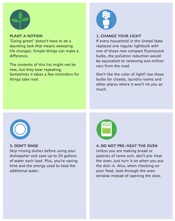
Excellent summary of (mostly) easy things you can do to reduce your footprint – carbon and otherwise: 50 Ways to Help the Planet. A quick read. Focus is on individual action, and doesn’t ask the impossible. I thought the call to use clotheslines was especially interesting — in the U.S., we obsess about how energy-efficient our dryers are. But when I lived in Australia in 1983, nobody had a dryer – to own one would have appeared wasteful and indulgent. Recently talked with friends just returned from living in Australia, who confirmed that dryers are still uncommon. And talking with others a couple of nights ago, confirmed that this is still the case in many (most?) countries. Dryers v. clotheslines are a great example of the degree to which a culture is willing to be inconvenienced to avoid waste. The U.S. is extremely adverse to inconvenience, and cultural norms are extremely difficult to change (n.b.: We own and use a dryer too).
The counter-argument to this kind of list is that it ignores the big picture (big oil, big industry). But change has to happen at all levels (“Think globally, act locally.”) Every action you take, every decision you make, is a vote for how you want things to be (the Categorical Imperative). If you want a habitable planet, you must act towards it. If you want a habitable planet for your children, you must at least try to set an example, show them that not every action need be wasteful.
Lately I’ve been more wrapped up than I probably should be, obsessing about the fact that – by this point in time – we need to be beyond the point of asking whether we need to be taking drastic steps to stabilize the environment before it’s too late, but how. I’m bothered by two groups: On one hand the apathetic – people who hear all the science going down, but do not act to change their lifestyles. On the other we have the actively oppositional – people who continue to dispute that the mountains of evidence that we are facing dire consequences for our neglect is real, or that all this talk about consequences is just a money-making scheme for Al Gore. Yes, people with this view are real, numerous, and influential. And I personally think they’re dangerous.
I recently confessed to friends how chewed up I was feeling about all of this, and one said something to the effect of “But this is all just your opinion, and you want to force your opinion on others.” Well, I do believe that humans don’t want to be inconvenienced, and that we’re not going to get to where we need to be without lots of enforcement. If we allow the apathetics and the conspiracy nuts who either ignore or deny the critical state we’re in, we have no reason to hope that we can save the human race from what is now pretty much certain destruction at our own hand. So, yes, I do feel like we need to “force” environmental care on everyone. If we don’t, we’re doomed. But … what exactly is an opinion? How overwhelming does the evidence have to be before something crosses over from opinion to actionable fact? Is this really just the “opinion” of the vast majority of scientists?
The world runs on bread, and financial incentives help. When it’s financially beneficial to go green, people and corporations do. The question for me is, how can we get to a point where our motivations are more than just financial? For example, that we agree to reduce the speed limit not because it will save us money, but because it reduces carbon emissions, i.e. because it’s the right thing to do, i.e. because it satisfies the Categorical Imperative? I see people on Twitter talking about the move to reduce the national speed limit as an example of a “nanny state.” Well… if people were motivated by their sense of responsibility to the planet that gives them life rather than just to their wallets, we wouldn’t need a nanny state, would we? But that’s never going to happen.
Four or five years ago, one would be branded a radical liberal even to suggest that Bush and his administration were acting illegally and committing war crimes, and that they should be held accountable in an international court of law. Now that the International Red Cross has delivered its report to the CIA stating categorically that the U.S. has conducted a program of torture and that torture is illegal, the remaining question is “Will these administrators be punished, or not? And if not, why not?” So many analysts pose the question as if it’s a close question… but it’s not.
It’s simple: Are we guided by rule of law, or aren’t we?

 For years, the MySQL project has been busy bolting on features to help it compete for attention/market-space with the big boys of relational database land (mainly adding triggers and stored procedures, but also lots of other smaller features). Result: MySQL gets more respect with every passing year, and is now one of the most widely-deployed databases in the world (with the exception of