Africa Bike Drive

For the last 12 years, I’ve been riding this 1996 Gary Fisher Kaitai – a bike I bought from my editor during the BeOS Bible project. We’ve been through thick and thin together: A lot of rain and mud, a bunch of repairs, and countless daily commutes from El Cerrito to UC Berkeley and back. But despite the fact that my body and this bike are virtually united, I’ve been hankering lately for a new ride — something actually fitted for my body.

kaitai2.jpg

But every time I get on that bike, I feel guilty for even contemplating giving it up. There’s nothing wrong with it. I have a relationship with this bike. Just a few days ago, finally decided to keep riding it until it wore out.

Today, riding a few miles along the Bay Trail with friends and family, coming down off one of the amateur wheelies I like to pop from time to time, I heard a loud cracking sound. Suddenly, the handlebars didn’t turn the front wheel anymore. Uh oh. Got it home and opened up the top tube to find the handlebar stem badly cracked. Took off to find a replacement stem at local bike shops.

It was then I was reminded why standards matter and proprietary variants suck. For a couple of years, Gary Fisher had experimented with a non-standard stem size of 1 1/4″, rather than the typical 1 1/8″ or 1 1/2″. One shop after another gave me the same bad news: “I’ve never seen a stem that size.” “Good luck finding a replacement.” “I doubt even the Gary Fisher company themselves have them in stock.”

Was beginning to contemplate an internet hunt, when the sales manager told me about Mike’s Bikes Africa Bike Drive, which takes tired old Bay Area bikes and sends them to Namibia, where mechanics piece them back together and give them to Africans in need of reliable, inexpensive, eco-friendly transportation.

A remote village in Namibia is the location of our new Sister Shop, a place where there is little access to telephones, much less bicycles. Erasmus and Ludwig are our point-men on the ground along with Peace Corps Volunteer Kami. They are thrilled to have an opportunity to bring a better life to their community through the power of the bicycle, which is our philosophy exactly. With your help and generosity, it’s going to be a beautiful partnership.

Tax-wise, it worked out pretty well. We estimated that the tax savings would approach what I would have made by selling the bike on craigslist — after going through the twin hassles of fixing the stem and finding a buyer. Decided then and there to let the old Kaitai go. In a few weeks, it’ll hopefully have a new home with a person in Namibia who needs it more than I do.

And, of course, this was exactly the sign I’d been waiting for that it’s finally time to go bike hunting. The Renovo Panda makes my heart skip a beat, but eyes and ears are wide open to other options. Got a favorite commuter bike to recommend?

Unloading the shipment from last year’s Africa Bike Drive.

NuForce uDAC

A few weeks ago, during a spell of unusually dry winter weather, I went to unplug a pair of Grado SR-80 headphones from my iMac. A spark of static electricity leapt from my fingers, I heard a brief crackling sound, and then… [silence]. From that moment forward, the headphone/speaker jack on the back of the Mac has refused to work, and only “Internal Speakers” showed up in the System Preferences Sound panel. My trusty work Mac had gone mute.

My only options were either to send the Mac in for repair or switch to USB audio output. I couldn’t afford to be without the Mac, and I was interested in hearing what kind of audio upgrade I’d get by bypassing the Mac’s internal Digital Audio Converter (DAC), so I hit up an audiophile friend for recommendations. Hit the jackpot when he suggested the NuForce μDAC (aka microDAC) – a handsome $99 outboard DAC smaller than a pack of smokes.
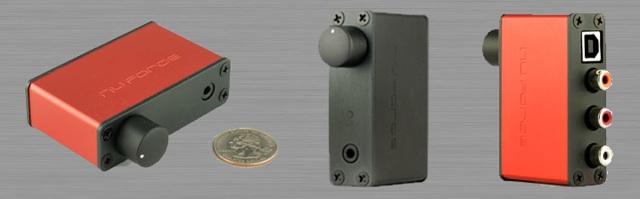
The unit arrived a few days later, and turned out to be even smaller than expected (around 3″x1″). The two-tone rust and flat-black anodized aluminum casing looked distinguished, and well-crafted; NuForce really put some effort into the aesthetics on this one. The design is simple, with no unnecessary controls. Just a volume knob and a headphone output jack, nothing more.

I was blown away from the moment I plugged it in and enabled it in the Sound prefs Output panel. Digital audio has never sounded better on a computer I’ve owned. But since the original analog jack was fried, I had no way to directly compare the quality of the Mac’s native DAC with the new outboard. Today I sat down at someone else’s work Mac and did some A/B testing.

For the test, I chose two recordings:

  • Sonny Rollins: “I’m an Old Cowhand” (from Way Out West)
  • Beatles: “Because” (from Abbey Road 2009 Stereo Remaster)

(I chose these two because A) I love them and B) I had them on hand at 256kbps AAC, for best possible resolution).

Note: I appreciate great-sounding audio, but I’m far from a hardcore audiophile. For a balls-out audio tweak’s perspective on the μDAC, see HeadphoneAddict’s review at head-fi.org.

Just a few minutes into Cowhand, I noticed something I’d never heard before: The sound of the cork linings of the valves of Rollins’ saxophone tapping away as he played. It was subtle, but it had been there in the recording all along – I had just never noticed it. And that’s exactly the point – the differences are subtle, and you may not notice all of them unless you’re listening for them, but they’re present. And that subtlety adds up to an overall experience that’s simply more realistic, more nuanced than what you get with the cheaper DAC built into consumer PCs. It’s all about presence.

Likewise, I found the harmonies in Because fuller, richer, more bodied than they sounded through the Mac’s native DAC. The French horns far more alive and breathy, the harpsichord more twangy. Virtually everything about these two tracks sounded more engaging.

Another thing I noticed: Usually, near the end of a long day writing code, I feel the need to take the headphones off and rest my ears. I didn’t have that sensation today. I can’t say for sure, but I suspect that more natural sound is less fatiguing to the ears (and the brain’s processor).

One caveat: Because there’s no longer an analog sound channel for the computer to manipulate, you’ll lose the ability to control volume or to mute from the Mac’s keyboard. Apparently this is not true of all DACs – the driver for m-audio boxes does allow volume and mute control from the Mac keyboard, so the issue must rest in the generic Mac USB audio driver (the NuForce unit doesn’t come with an installable driver – it’s plug-and-play). In any case, the keboard habit has been ingrained for so many years I don’t even think about it, so retraining myself to adjust audio from the μDAC’s volume knob took some getting used to. However, you can still use the volume control in iTunes itself, and it may be possible to re-map the keyboard’s audio control keys to tweak iTunes’ internal volume directly.

It’s no secret that you can get better sound quality out of almost any computer by routing around the built-in audio chipset. There’s just no way Apple (or Dell, or anyone else) is going to spend more than a few dollars on high-end audio circuitry when most people are perfectly happy with 128kbps MP3s played through cheap-o speakers, and every penny counts in manufacturing bottom lines. But using an outboard DAC for signal conversion can be an expensive proposition, not to mention involving bulky, inelegant, desk-cluttering plastic boxes. The NuForce μDAC gives you high-end computer audio that’s both affordable and elegant.

Another benefit: If you’ve been considering using a dedicated digital audio file player like an AudioRequest connected to the home stereo, you’ll end up having to migrate and store another copy of your audio library, not to mention add more cabling and componentry to your entertainment center. With something like the NuForce μDAC, you can leave everything on your main computer and just route high-fidelity audio to the stereo.

In any case, the NuForce μDAC is one of the best c-notes I’ve dropped on audio gear over the years. Recommended even if you haven’t fried your analog port.

Update: This article has been republished at Unclutter.com.

DC’s Plastic Bag Tax

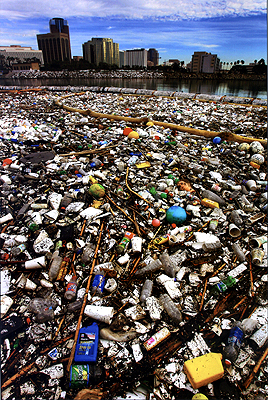
great_pacific_garbage_patch.jpg Residents of Washington D.C. started the new year with a shiny — albeit tiny — new tax. Shoppers who show up at stores without their own bags or boxes will need to start paying 5 cents each for them. In my view, this is an excellent idea, and long overdue. I’d love to see a tax like this applied nationally (even globally, if such a thing were possible).

We’ve known about the massive environmental problems caused by an excess of plastic in general, and of plastic bags in particular, for decades. See Salon’s excellent Plastic bags are killing us for details. We know that only a small fraction of plastic bags get recycled, and that the vast majority end up in landfills or in the ocean. As of 1992, 14 billion pounds of trash were dumped into ocean annually around the world. The world’s largest landfill is now officially the Pacific Ocean — as of a few years ago, 100 million tons of plastic were swirling in the Pacific Gyre.

The way I see it, anyone who had been watching this news would have started refusing to accept plastic bags (or any bags, ideally) from stores years ago. But for whatever reason, people haven’t. Stand in line at virtually any grocery store and count the percentage of patrons bringing their own bags. To me, the DC tax seems like too little too late, if anything.

The lack of willingness on the part of consumers to give up the smallest conveniences for the sake of the environment is a tragic reminder of our collective complacency. Since people won’t voluntarily step up and do the right thing without a carrot or a stick to guide them, DC has decided to use a stick (taxes).

great-pacific-garbage-patch-jj-001.jpg

I recently got into a discussion on Twitter with @vmarks and @russnelson about whether the tax was a reasonable response to the crisis. Apparently libertarians, their opinion is that taxes represent “force,” and that some form of reward system would be more effective than a tax. Stores should incentivize canvas bags by giving discounts to those who bring their own. I have a couple of responses to that line of reasoning.

First, many stores already do this. That’s excellent, but it puts the cost burden on the store, rather than on the consumer, where it belongs. And it effectively means that stores that don’t reward personal bags are financially disadvantaged compared to stores that don’t. That, in turn, means the overall financial incentive is to NOT reward use of personal bags.

Second, voluntary participation rates are pretty low. Go to a store where personal bags are incentivized and count the number of consumers who do bring their own. There are still tons of new paper and plastic bags walking out the door every day. Unfortunately, we’re not in a position where we can afford to leave this up to personal choice. Too many people will put the small convenience of not keeping a personal bag or two in the car above the massive environmental destruction that results from them not making that choice.

great-pacific-garbage-patch2.jpg

Third, let’s take it as a given that the crisis must be addressed effectively, and that urgent global solutions are required. If you want to use a carrot-based system rather than stick-based, you might be tempted to say “Just require stores to use an incentive program.” I’m sure the numbers would look better if incentives were required, but do you see the irony here? You would have traded the stick of taxes (force) with the stick of requiring stores to participate (force). You would not have escaped the fact that the direness of the situation, combined with the complacency of both stores and consumers, requires a force-based approach.

The tax is minor, and it’s not a blanket tax. No one who does what they should be doing anyway (bringing personal bags) will ever have to pay it. The tax is present because we can’t wait for carrots and volunteerism to do the job.

I find it unfortunate that certain cross-sections of the population have such a knee-jerk reaction to taxation in general that taxes are always seen as problematic, even when they’re inexpensive and sensible.

The free market is responsible for this problem to begin with. Free markets, left to their own devices, will seldom take care of their own side effects. The right thing to do would be for the U.S. to stand up and be a world leader on this, to simply make plastic bags at grocery stores illegal. It should not be a matter of “personal choice” to use products that hurt us all so profoundly (i.e. it’s not like the choice of whether to wear a motorcycle helmet – a purely personal choice). But that’s not going to happen. The very least we can do is to financially punish those who make choices that hurt us all.

Agree/disagree? Leave a comment, and vote in the poll.

Is a bag tax a sensible way to curb plastic bag use?

View Results

Update 01/10: China leapfrogs enviromental policy of other countries by banning plastic bags outright. The country expects to save 37 million barrels of oil annually (on top of the immense environmental benefit).

Playing With Light

Amy, Miles and I did some experiments with flashlights and a laser pen recently, drawing in the air in the kitchen with 6-second timed exposures. Unfortunately Amy’s camera didn’t have a CF card inserted, so we were able to save only a few of them done with my dinky point-and-shoot (I actually didn’t realize my SD1100 was even capable of doing timed exposures until that evening).

Volkswagen

Dig my little Volkswagen? Would like to play with this technique more one day – great possibilities.

Flickr Set

(I Don’t Care About) Facebook and Privacy

I’m puzzling over the recent brouhaha regarding Facebook’s changes to their privacy policy. To be clear: I’m not puzzling over the changes (though they are confusing to the user who just wants to use the service instead of thinking about its internal minutia) – I’m puzzling over the concern about them.

computer-privacy.jpg Blogs are 100% public. Twitter is 100% public. Posting on newsgroups and forums is 100% public. The web in general is a public space. I’m wondering WHY there are such dramatically different expectations on Facebook than everywhere else. Fine-grained control over exactly who gets to see exactly what? All of this comes down to a single problem: Millions of people apparently want to have a web presence and yet be private at the same time. Everywhere else online, it’s one or the other.

For me, it’s simple: If what you have to say shouldn’t be said to the whole world, then don’t say it online. In other words, the basic assumption is wrong to begin with. Facebook is trying to give you the sense that you can post online and control your privacy at the same time. It doesn’t work.

Actually, this problem isn’t limited to the web. When you walk down the street, you’re on public display. You don’t pick your nose in public because… well, you just don’t. You don’t need to be told that that’s something you do in private. If you have something private to say to someone, you whisper in their ear, or you call them. Or you email them. Don’t post it where others can see it.

The idea that I should be able to play online but not have to worry that my thoughts are completely public just seems… unrealistic. How many stories have you read about people being fired or worse over comments they’ve made on Facebook? Did their privacy settings protect them? No – things get out. The problem is not Facebook’s new privacy settings, but an epidemic of oversharing. It’s a problem that should be solved the same way we solve it in the real world – by being discrete – not by adding more dials and levers to our interactions.

fbprivacy.gif

Then there’s the question of reach. In general, people want to be heard. They pay close attention to the number of Facebook Friends or Twitter followers they currently have. Bloggers watch their traffic logs obsessively. Why? Because they want their thoughts to be heard as widely as possible. Guess what gives your thoughts the widest possible reach? Completely open platforms with no concept of privacy, like Twitter, blogs, and forums. In those spaces, it’s up to the user not to broadcast things they don’t want the whole world to see.

I’m personally glad that Facebook is gradually nudging users to share more content publicly, putting the brakes on this expectation that people can post online but not be public. When was the last time a Facebook post showed up in your Google search results? OK granted, I wouldn’t want most Facebook posts polluting my search results (there’s a whole lot of noise out there), but there’s also a lot of great content locked away behind the “privacy” firewall that really should be part of the public web — which is built on concepts of openness and transparency.

The fact that only people who “friend” me can see my content on Facebook is an annoyance to me, not a feature I cherish and wring my hands over. My dream “privacy” preference for Facebook would be a simple checkbox option reading “I acknowledge that I’m writing stuff on the web. Treat my content as such.”

Update 01/04: In an interview in front of a live audience, Facebook founder Mark Zuckerberg says if he were starting all over again, he’d make everyone’s information public. Because that is the “social norm.”

Please Remember Victor Jara

For Stuck Between Stations, Roger Moore has an excellent new post:
Please Remember Victor Jara, “the Chilean singer-songwriter and pioneer of the nueva cancion movement, who was tortured and murdered with many others following Pinochet’s CIA-supported 1973 military coup on September 11, 1973.” Jara’s name is little-known in the U.S., but he was canonized in the Clash’s track “Washington Bullets,” when Strummer intoned “Please remember Victor Jara, in the Santiago stadium.”

Silver Balls

Accidental team effort: A while ago, we ordered a set of super-magnetic BuckyBalls from ThinkGeek. Miles soon discovered he could stick them to the nails in our wooden floor, and stack them up in delicate little towers. Amy, with her amazing eye for detail, saw something beautiful in the scene and started taking pictures – close up, and with a very short depth of field. She accidentally left the camera’s light temperature sensor set to Tungsten, which caused this gorgeous bluish cast.

silverballs_cover.jpg

Remembering that ThinkGeek has a section attached to each product in their catalog for “Customer Action Shots,” I submitted the image alongside their BuckyBalls product entry. Next day, amazed to discover we had won this month’s user submission prize!

I’m totally in love with Amy’s shot — and with Amy. And with Miles.

Happy New Year everyone. Love to all.

Five Teenagers

J-School students have been doing amazing work this semester on a trio of hyperlocal news sites: Mission Loc@l, Richmond Confidential, and Oakland North. I’m particularly moved by their multimedia feature piece, Five Teenagers, which takes a look at “Teens On Target or TNT, an after-school program based at East Oakland’s Castlemont High School. TNT trains students to teach violence prevention in the city’s middle schools.”

The video above is excerpted from the piece, but be sure to visit and check out the whole package, which interviews five teens, breaks down some chilling numbers, and provides an embedded map of regional homicides thanks to Oakland Crimespotting.

I was also impressed by the lack of Flash in this piece – everything is done with JQuery. Multimedia journalism and Flash go hand-in-hand (just surf through the projects listed at Interactive Narratives and count how many are done in Flash vs. standard methods). But slowly, multimedia journalists are beginning to realize that the downsides of Flash that we web standards geeks rant about are real, not just theoretical. At the same time, the quality, reliability, and ease-of-use of Javascript libraries like JQuery really are making it possible for non-programmers to put packages like this together.

Great work, guys!

iTunes Remote Control

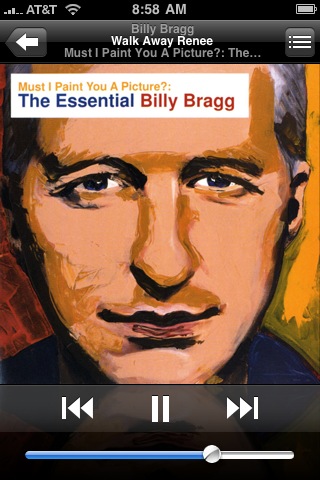
bragg.jpg Update, April 2016: Since iTunes 12 and Apple Music, I now store my entire collection in the cloud and am able to access/control it from anywhere, easily, and to redirect the output to any AirPlay device. So the notes below are no longer relevant.

Scenario: Music collection on an iMac in the office on one end of the house, pumping music over Airport Express to stereo in the living room on the other. Need to be able to remotely navigate collection and control playback from a laptop in the living room.

Seemingly perfect solution: iTunes Remote app for iPhone, connecting to the office Mac via wi-fi. Close, but not quite. At first, iTunes Remote app seems like the perfect remote control, complete with album covers. But a real remote you can pick up and operate on a moment’s notice, no strings attached. The iTunes Remote app, on the other hand, takes around 10 seconds to re-connect to the remote library every time you want to use it. You wouldn’t accept that kind of delay from any other remote control, so iTunes Remote gets annoying fast.

Alternative 1: Enable iTunes Sharing on the office Mac, then launch a copy of iTunes on the living room laptop and access the shared library. Configure iTunes to send music from the laptop directly to the AEX. Problem solved? Not quite. I rely heavily on the ability to rate tracks as they roll through. 1 or 2 stars for the tracks I can live without, then periodically cull duds from the collection based on ratings. Tracks with 4 or 5 stars form the basis for my best playlists. Unfortunately, when connecting to a remote library in this way, you have read-only access, and no way to rate tracks on the remote box. Bzzzzzt, deal-breaker.

Remote_iTunes_Logo_1.jpg Alternative 2: Third-party software. There are a few shareware packages available in this niche, but the only one I found that worked reliably was Jonathan Beebe’s open source Remote iTunes. The interface is a stripped down clone of iTunes itself, but its remoting ability includes something iTunes does not – the ability to authenticate as an admin user. Enter the IP of the office Mac, a username and pass, and give it a few seconds to pull across the music library index. Once connected, it stays connected, and you get the ability to rate tunes on the remote system. It’s not perfect, but close enough for jazz.

I’d love for iTunes itself to grow this ability so I’d have access to all iTunes features. Alternatively, I’d kill (not literally) for a desktop version of the iPhone Remote app. But Remote iTunes gets the job done with less pain than anything else I’ve tried.

Reasons To Be Cheerful

Recently at Stuck Between Stations:

Roger: Reasons To Be Cheerful

… on how a new biography and forthcoming film may signal an Ian Dury renaissance.

As the missing link between Benny Hill and Bertrand Russell, Dury had ingenious ways to find the sublime in the ridiculous. His backing band, the Blockheads, stayed tight and funky in an era better known for its sloppy chaos.

Scot: Auto-Tune This!

… finally learning what the mysterious term “auto-tune” means, just as the meme heads for the dustbin.

Scot: So Messed Up, I Want You Here

Would Iggy Pop approve of this modeling school for girls rendition of “I Wanna Be Your Dog?”

Roger: Blues for Dracula: An Impromptu Halloween Playlist

If you’re George Clinton, every day has been Halloween for the last 68 years.