Asleep in the Classroom: A Wakeup Call from Tomorrow

Loose notes from SXSW 2011 session: Asleep in the Classroom: A Wakeup Call from Tomorrow

America’s students are bored. According to the Gates Foundation, boredom is the number one reason they give for dropping out of school. How can creativity, innovation and technology address this growing crisis in education? If technology is a driver for shorter attention spans, can it also be the solution to bring back the wonder of education? Can we extend the reach further and engage our students more both inside and outside of the classroom, to reawaken a love of learning?

Continue reading “Asleep in the Classroom: A Wakeup Call from Tomorrow”

Fireside chat: Tim O’Reilly with Jason Calacanis

Loose notes from SXSW 2011 session: Fireside chat with Tim O’Reilly with Jason Calacanis

Jason Calacanis, Founder, Mahalo.com
Tim O’Reilly, Founder/CEO, O’Reilly Media Inc

Wonderful way to open a week of stimulating sessions that challenge preconceived notions of technology, politics, and journalism in unexpected ways. O’Reilly was an intellectual silver bullet, as always, but really nice to catch him in an unscripted conversation rather than in one of his more “formal” talks.
Continue reading “Fireside chat: Tim O’Reilly with Jason Calacanis”

Dork Intervention: Bringing Design to Agile

Loose notes from SXSW 2011 session: Dork Intervention: Bringing Design to Agile

Agile is broken. How can designers help deliver products that users will love while grappling with the constraints of agile in corporations? With large companies rapidly adopting agile methods, it is crucial that these teams include designers to create great products. But the agile framework available to larger companies doesn’t take into account the work style of design team members. Agile, by its nature, shortcuts the design process without considering the value that design brings, not only in providing on-the-fly design solutions but also when crafting the vision of a product that the team can build towards. We are designers with agile team experience in the corporate world. These are our stories of triumph and tragedy. Come hear what worked for us and share your own war stories.

Continue reading “Dork Intervention: Bringing Design to Agile”

The Compleat Guide to Digitizing Your LP Collection

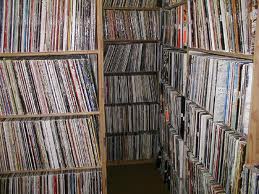
For anyone over 40 (or maybe 30), having a music collection probably means that, in addition to racks of CDs and ridiculous piles of MP3s, you’re also sitting on bookshelves (or “borrowed” milk crates) full of vinyl LPs. Hundreds of pounds of space-consuming, damage-prone vinyl. LPs were music you could touch, with glorious full-color 12″ album art, meandering liner notes, and the practical involvement of lowering needle to plastic. Long-playing records represent an era when music was less disposable – we actually sat down to listen, rather than treating music as a backdrop to the rest of life. Dragging a rock through vinyl was not some kind of nostalgic love affair with the past – it was just the way things were. The cost of admission was pops and scratches, warped discs, having to get up in the middle of an album to flip the disc, cleaning the grooves from time to time, and getting hernias every time you moved to a new apartment.

We loved our vinyl despite and because of its warts, but we also didn’t hesitate to go digital when the time came – first with CDs, and then with MP3s and other file-based formats. We complained that CDs lacked the “warmth” of vinyl, but CD technology got better over time. We complained that the typical MP3 was encoded at bitrates too low to do justice to the music, but we learned to encode at higher resolutions, or to use uncompressed/lossless formats. Eventually, most of us gave in to temptation and started listening only (or mostly) to files stored on a computer somewhere in the house. Over time, many of us stopped listening to LPs altogether – but that doesn’t mean we got rid of them.

I personally held onto around 700 records made before the 90s, in addition to a few boxes of records my parents left in my care. Most of my CD purchases from the 90s and 00’s had been ripped long ago, but the LPs were locked in limbo – wasn’t listening to them, but couldn’t bear to let go, either. In 2011, I finally decided it was time to hunker down and digitize the stacks, to un-forget all those excellent records.

Digitizing LPs has almost nothing in common with ripping CDs. It’s a slow process, and a lot of work. But it can be incredibly rewarding, and going through the process puts you back in touch with music the way it used to be played (i.e. it’s a great nostalgia trip). In this guide, I’ll cover the process of prepping your gear, cleaning your records, and capturing as much of the essence of those old LPs as possible, so you can enjoy them in the context of your digital life.

Continue reading “The Compleat Guide to Digitizing Your LP Collection”

Humpty Hump, Beefheart, P-Funk and the Future of Criticism

Recently at Stuck Between Stations (the music writing joint I sometimes scribble for):

Roger, on the not-so-hidden connection between Ex-Republican spokes-rapper Michael Steele and Digital Underground’s funky auteur: Humpty Escapes the Tea Party Before the Martian Invasion

In 2012, neither party will be able to escape the demographic reality that the country of the future will look more like Oakland than Fairfax County. And that means that, regardless of ideology or economic philosophy, we’ll all soon be doing the Humpty Dance. Personally, I’m looking forward to finding out how Mitt Romney will deliver lines like “I’m spunky, I like my oatmeal lumpy.”

Scot, with a quick synopsis of a UC Berkeley panel on The Future of Music Journalism: Will the rise of music recommendation services like Pandora and Apple Genius affect the role of the traditional music critic?

My take is that the premise of the question is baloney. People read music journalism for a ton of reasons other than just finding recommendations. They read to try and grok the entire universe of music – to get the back-story, to trace influences, to absorb opinions, to color the landscape. Recommendations on what to buy, I expect, are pretty low on the list of reasons why people read about music.

Scot reprints an oldie but a goodie from Pagan Kennedy’s book “Platforms: The Political Pop Culture of the 70s” — Can You Get to That? The Cosmology of P-Funk.

P-Funk seemed to believe that music wasn’t so much something that you made with your instruments as it was something that you caught with them, as if funk was out there in the form of an ambient residual energy left over from the big bang. It was as if their basses and horns were finely tuned, specialized antennae dialing into cosmic leftovers. Funk became a unifying presence — the godhead as manifest to anyone willing to laugh and boogie at the same time. “One nation under a groove, gettin’ down just for the funk of it.”

Scot, on the passing of Don Van Vliet: Practice in Front of a Bush: Stuck on Beefheart

Beefheart can’t have been pleasant to work with – a musical tyrant who once threw a drummer down a flight of stairs because he couldn’t figure out what was meant by the commandment “play a strawberry” on the drums, and who gave infuriatingly vague-but-poetic directions to musicians like “Play it like a bat being dragged out of oil and it’s trying to survive, but it’s dying from asphyxiation.” Beefheart may have been an artistic tyrant, miserable to work with (unless you enjoy living on beans (laser beans)), but the amazing thing was, the tracks did sound exactly like the impossible psychedelic visions he demanded, and the world never recovered.

SoloMail, WordPress Mass Management

There are a number of plugins out there designed to scan a WordPress site on a periodic basis (e.g. nightly), grab all the recent posts, and tidy them up into an email digest. Heck, I even wrote one of my own a few years ago. Some work as WP plugins, others scrape RSS feeds.

But none of them let you hand-pick the posts you want to send by email, none of them let you “send now” and few of them provide good controls for managing the HTML/CSS of the email template. So I decided to write my own. SoloMail uses the excellent PHPMailer class, which is now included in WordPress core, and provides a simple checkbox on post views that lets you “Send now.” The current post is wrapped in a completely customizable HTML email template, and sent either to all registered users of the current site or to an external mailing list (preferred).

SoloMail is now available in the official WordPress plugin directory – get it here or see the post at Scot Hacker’s Scripts and Utilities.

To see it in action, subscribe to Birdhouse Updates.

Also: I’ve been hearing from developers who want to extend or improve the WordPress Mass Management Tools collection, so I’ve made it an open source project and posted it on github. Go for it.

Cigar Box Ukulele

Wonderful Amy got me a cigar box ukulele kit for Christmas… more than a year ago :)

I finally finished the build a few weeks ago (ridiculous, right?), and have been having a gas with it. Full writeup and pics over on Bucketlist, but here’s the slideshow version, as well as a little video I put together to show how the sound of a cigar box compares to the warm tones of a nice professionally built koa wood uke.

As I was told by a uke head in Hawaii at the start of last summer, “Sound is round, round is sound. What do you expect from a square box?”

The Flickr set includes captions. Here’s the video comparing sound of the cigar box to a “real” uke:

Marshmallow Shooters

While researching ideas for the PVC pinecone catapult a while ago, Miles and I found these instructions for a blow-pipe Marshmallow Shooter. PVC is such a wonderful material to work with – cuts like butter, cheap as dirt, and all the elbows, caps, and T-joints you could possibly want are readily available at any hardware store. What’s not to love?


Full PDF

Today we decided to go for it. 10 feet of schedule 40 1/2″ PVC costs all of $2.50. With all the joints and fittings, total cost was a few bucks per “gun.” I put “gun” in quotes because this thing is just so darn playful, and I’m not sure it qualifies. It’s more of a “human breath marshmallow launcher.” And when the bullets are made of puffed sugar, it’s a stretch to call out the gun play metaphors.

Miles measured and marked out the segments after studying the comic above, I worked the chop-saw, and we assembled together. Total build time was less than 20 minutes. Mini-marshmallows fit cleanly into 1/2″ PVC (the snugger the better). We were completely amazed at how straight and clean these babies fly – we were able to launch them 25-30 feet and hit targets like the chimney on the roof, bus stop signs, or the sidewalk on the other side of the street with ease. They do sting slightly if you get hit at close range, but not at all through a light shirt or pants.


Miles finds his mark – Mommy gardening

They’re soft enough to be totally safe in the house, but don’t stomp ’em into the carpet or you’ll be sorry. Outside, they can probably be considered completely biodegradable.

Subscribing to TED Talks in HD with TiVo

When you burn out on the TV wasteland and want some actual brain food, podcast junkies will tell you that one of the most reliable sources of high-quality content is the seemingly bottomless series of TED Talks. Brilliant minds in every topic field, from recycling to neuroscience, reefs to religion, get 5-15 minutes to hold forth, bend your brain, and make you a better person. TED has expanded beyond its roots, and TED talks are now held all over the world at satellite conferences, meaning there’s an endless supply of great content. The site graciously provides the talks as archived video, always available.

TED’s not a cable channel, but its content is accessible via RSS. If you’re a TiVo user, you’ve got a two-part problem: 1) How to get something akin to a TED Talks “Season Pass,” so you always have access to recent stuff, and 2) How to get the talks in HD format, since standard-def internet content looks horrible on an HD TV.
Continue reading “Subscribing to TED Talks in HD with TiVo”

Photo365 Project

A few years ago, we started hearing about intrepid souls committed to taking one photograph per day for an entire year. Shortly after, a web site designed to accommodate people doing the project popped up (365project.org). Yesterday being New Year’s, there was a lot of talk on Twitter from people wanting to dive in. Rapped about it with some friends, and four of us decided to go for it in 2011.

Since almost everyone these days is on Flickr, Instagram, Facebook etc., and since almost everyone has a phone in their pocket capable of taking relatively high-quality images, it’s never been easier. In fact, many people already take at least one photo per day without even trying. There are even 65 people on Bucketlist.org who have committed to doing the project (here’s mine).

I’ll be posting to Instagram as usual, and using the Flickr app for iPhone to push some of those photos up to a dedicated Flickr set. There’s also a very large Flickr group consisting of people doing the project (see instructions on that page).

Here’s an embedded slideshow of my set, which will grow longer as the year goes on: