How do you design a computing interface for six seven billion people? There’s no single app or operating system that everyone uses, but there are computing paradigms that are literally universal. One of those is the simple ability to cut-and-paste text – something so fundamental that it seems to always have been there. But it wasn’t – it had to be invented, had to evolve, like everything else in this world.
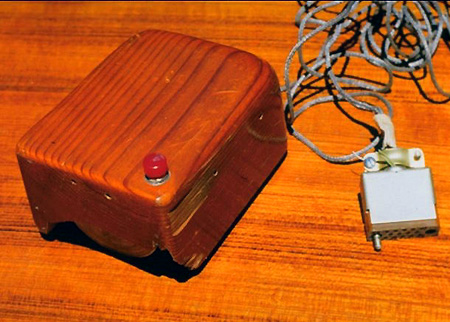
 Fascinating talk by Larry Tessler at the Bay Area Computer Human Interaction last night. Tessler was at Xerox PARC and Apple in those legendary early days when the computer was being elevated from a purely command-driven interface to GUI systems. The computer mouse had just been invented, but since it was a newborn, no one yet knew exactly how it would be used. Engineers fought over how many buttons it should have, and what those buttons should do. And it simply hadn’t occurred to anyone yet that dragging the mouse over text could do something interesting.
 Tessler was working on the Gypsy word processor, and struggling at every turn to eliminate blocking “modes” from computer interfaces. Deleting a word from a sentence had involved complex verb -> noun -> action sequences, as in “Delete word #6… OK do it.” The paradigm of selecting text and then acting upon it (noun -> verb) hadn’t been invented yet. But while the very concept of text selection was being imagined and implemented, the mice of the day were clunky and difficult to aim. Dragging out selections was an erratic process, and the software already had to employ predictive algorithms that figure out what you meant to select rather than what you actually did select.
To early users, the concept of an invisible clipboard was strange, so a strip at the bottom of the screen called the Waste Basket held cut text; you could pull cut text out of the Waste Basket and place it elsewhere in your document at any time.
Over time, concepts of text selection and the invisible clipboard spread to other software, then to other operating systems. Today they work identically in virtually every computing environment, so welded to the fundamentals of user experience that we never even think about them. Eye opening to learn how much thought, how much trial and error went into the development of these basic concepts.
Also interesting to hear how Apple ended up with the one-button mouse, even though the mouse started off as multi-button. The key, as Tessler described, was that 99% of end users of the time had never touched a computer in their lives. A multi-button mouse introduces complexities we don’t think much about today – should the 2nd / 3rd button emulate the Cmd key or the Ctrl key? Should one of the buttons be for un-do? Etc. etc. In the absence of the common right-button paradigms we have today, multi-button would have introduced a lot of unnecessary confusion. Ironically, Tessler described a meeting decades later in which he and a fellow engineer who had fought for multi-button back when reversed their positions – Tessler admitting that maybe they should have launched with multi-button, and the other guy admitting he should have fought for single button from the start.