
Paraplegic Kitten

Storm of news over the past couple of weeks about the recent appearance of a pair of meek little proof-of-concept viruses for the Mac. It’s a news item not because the viruses are widespread, or because any noticeable damage is being done — it’s a news item because, until now, viruses for the Mac simply didn’t exist. Mac users have, perhaps foolishly, come to see their platform as a citadel of inherent security, leading to a common mindset that they can sit back and do nothing safely.

For Wired News, Leander Kahney writes Mac Attack a Load of Crap:

The smuggest of smug Mac users is right: the platform is more secure, and these new security threats are no more threatening than a paraplegic kitten. … Last month, there were four “massive” virus attacks on Windows, according to Commtouch, an antispam and antivirus vendor. Indeed, viruses are now so aggressive, they routinely outpace attempts by antivirus companies to distribute protective signatures. … These Mac “threats” are only news because of their novelty, not the threat level they pose.

Maybe, but once there’s a crack in the dyke, a village can flood pretty quick. For now, I’m with Kahney — I’m not installing any A/V software, nor am I suddenly regarding every email attachment or download as suspicious. But that could change.

In a way, this turn of events could become an acid test for the old argument about whether the Mac has been virus-free due to low marketshare or due to inherent security. If virus writers turn their attention to the Mac and go at it aggressively, the “low marketshare” part of the argument is mitigated, and we’ll be able to see whether the Mac really is inherently more secure.
Music: Burning Spear :: Jordan River

AskForCents

Send a question – any question – to q@askforcents.com. Leave the subject blank and type your question in the email body. Minutes later, get an answer. In fact, to hedge your bets against incorrect answers, you’ll get two answers. I’ve only tested it with one question, but both answers were correct.

2:13 am, Scot  Hacker:

Who was the fourth Banana Split, beyond Drooper, Fleegle, and Snorky?

2:16 am, AskForCents: 

Answer 1: 
bingo
Source: http://us.imdb.com/title/tt0062543/

Answer 2: 
Bingo
Source: http://12121.hostinguk.com/splits.htm

Service is currently free; paid version on the way. Looks like they plan to run the service on micropayments — a few cents per question. If it’s good enough, possibly useful for those times when a simple Google search doesn’t turn up what you’re looking for and you just don’t have time to look deeper. The key will be making it totally fluid – no one is going to enter a credit card number for a 3-cent charge.

Music: NEU! :: Hallogallo

20-Ton Packet

Analyst Nick Gall, in a podcast at IT Conversations, on precepts that make systems modular and extensible. His basic point is an old one, but well made: In order to have freedom for extensibility, you need a solid, but basic underlying architecture. Too much architecture in the framework, and you’re locked in, without sufficient freedom. Too little, and you have neither interoperability nor room to improvise.

Gall compares the simplicity of the lowly IP packet — source and destination addresses, protocol identifier, a TTL, and a payload — to the similarly internationalized system of modular shipping containers, which move so easily from train to truck to ship, can slide quickly between countries, arriving easily at their destination without ever having been opened. TCP/IP and the meatspace shipping container system form near-perfect mirror images of one another. The shipping container, in essence, is a 20-ton packet.

The balance between simple, formalized, underlying structure with a high degree of overlying freedom, applies to so many things. Thinking now of a thread we had here a while back on the fact that HTML standards are not enforced, while TCP/IP standards are.

And of a Drupal users group meeting I attended today, where developers referred to the balance they try to strike between creating enough structure to let you get things done easily in the CMS, but not so much that the system isn’t infinitely extensible.

And of jazz: Too little structure = inaccessible, chaotic (not necessarily a bad thing, but generally not successful). Too much structure = rigid, soulless, boring.

Music: MC5 :: Skunk (Sonically Speaking)

Hands Off My Internet!

Verizon, AT&T, BellSouth and their ilk are tired of net neutrality – the principle that “packets is packets,” and all should be passed along as equals. Net neutrality is one of the things that makes things “just work.” If these megacorps have their way with Congress, they intend to start double dipping – charging customers for broadband access, and also charging Google, Amazon, eBay etc. for bandwidth by giving preferential treatment to packets from companies that pony up.

Bellsouth’s William L. Smith told reporters that he would like the Internet to be turned into a “pay-for-performance marketplace” where his company would be allowed, for example, to charge Yahoo for the right to have its site load faster than Google.

Similar quotes from clue-free CEOs here. Common Cause is running the Hands Off Our Internet! campaign to let execs know they’re harshing our mellow.

Music: Stereolab :: Infinity Girl

Quality Tips for Webmasters

Long known for its terse, sometimes dense, but always authoritative documentation of the official HTML specifications, the World Wide Web Consortium (W3C) has launched something very different — a totally readable collection of Quality Tips for Webmasters. Just the stuff you need to care about if you want to develop pages that work well in a wide range of environments, that play well with screen readers and other devices for the disabled, that degrade well in older browsers, that respect the basics of web standards, etc. Sort of a back-to-basics primer for a web gone mad.

Music: The Fall :: Industrial Estate

The Smell of Decay

A year old, but interesting — Michael S. Malone for Silicon Insider: R.I.P. Microsoft? Malone detects a whiff of decay in the air around Microsoft, both in its inability to execute:

Now the company seems to have trouble executing even the one task that should take precedence over everything else: getting “Longhorn,” its Windows replacement, to market. Longhorn is now two years late. That would be disastrous for a beloved product like the Macintosh, but for a product that is universally reviled as a necessary, but foul-tasting, medicine, this verges on criminal insanity.

… and in its perpetual inability to really capture the public imagination:

Great, healthy companies not only dominate the market, but share of mind. Look at Apple these days. But when was the last time you thought about Microsoft, except in frustration or anger? The company just announced a powerful new search engine, designed to take on Google — but did anybody notice? Meanwhile, open systems world — created largely in response to Microsoft’s heavy-handed hegemony — is slowly carving away market share from Gates & Co.: Linux and Firefox hold the world’s imagination these days, not Windows and Explorer.

Of course marketshare will carry you a long, long way when your company is failing in other ways. But I think he makes some valid points. Whether it matters to the market is a separate question.

Thanks mneptok

Also interesting: Managing a Megaservice — a technical / QA peek inside the sausage factory at Hotmail.

Music: Bettye Lavette :: Just Say So

8MP Cell Phone Camera

Absurd headline: 8MP Camphone Spells Doom For Stand-Alone Digicams. Yes, it is incredible that Samsung is about to release the 8-megapixel SCH-V8200 camera phone. And yes, it is true that it’s all about convergence – I’d love to have really fine images come out of my phone. But there’s a long row to hoe between this and a true replacement for the standalone camera, both in terms of features / flexibility and in terms of lens quality, depth of field, etc.

One of the most difficult limiting factors in cell phone image quality is that there just isn’t enough physical depth in tiny plastic lenses to allow for decent focus or depth of field. One interesting approach to this problem is in hydraulically controlled liquid lenses, which closely resemble the way the human eyeball works.

8MP is a huge stride, but far from spelling doom for standalone cameras. But it’s not inconceivable that we’ll get there one day.

Music: Lou Reed :: Busload of Faith

FACE

Amazing Flash-free web page animation techniques: FACE (Faruk’s Animated CSS Enhancements). DOM manipulation via CSS+Javascript. Open source, and with a very clean API. Follow the Examples link for more. “Almost, but not quite entirely unlike Flash.” Wow.

Music: The Feelies :: Fa Cé-La

Impermanence

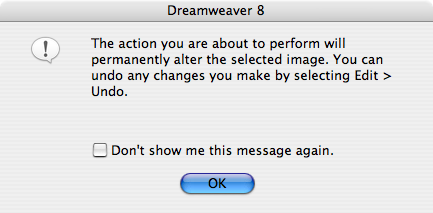
Yes, all is fleeting and transient, life is paradoxical, and all that blah blah woof woof. But still, Macromedia has an odd definition of “permanently:”

Macro Permanent

But then again, Macromedia makes Dactyl Fractal Zoom possible, so give ’em a break.

Hosting FAQs on WordPress

Overdue for a thorough going-over of the Hosting FAQs, but before I dove in, wanted a clean publishing back-end for them (I’ve been maintaining them through phpMyAdmin out of laziness — the thought of building yet another CRUD back-end fills me with dread). Also wanted to build in a search engine for users. Flirted with the thought of making the FAQs a Movable Type site, but decided to try something new and employ WordPress as a CMS instead.
Continue reading “Hosting FAQs on WordPress”