Went with Miles yesterday to the exhibition of Bruce Nauman’s 1960s work, A Rose Has No Teeth, at the BAM (the title is a Wittgenstein reference, from the Tractatus: It is false that a goose has teeth, nonsensical that a rose should have teeth; non-intersecting language games yield nonsense, though syntax seduces us into thinking that a logical proposition is concealed in there somewhere).
In one small, empty room, opposing speakers leaked Nauman’s disembodied voice, hushed and garbled, intelligible words seeping out at intervals. Miles and I danced in circles to a-rhythmic ghost tones until the guard cast an admonishing glance our way.
At one point, a chair facing a sculpture. Miles looks up at me and asks, “Daddy, is it okay for me to go on this?” I answered, “Of course, it’s a chair!” He looked at it and then back at me. “Oh. I thought it was part of the artwork.” Poor pomo kid, confused by the boundaries between life and art before he’s had his first art history class.
Later, bought a copy of Yoko Ono’s Grapefruit, back in print after 30 years. Grapefruit is a book of instructions and notes for conceptual performance pieces. Sat and read through some of the instructions with Miles tonight, including:
PAINTING FOR THE SKIES
Drill a hole in the sky
Cut out a paper the same size
as the hole.
Burn the paper.
The sky should be pure blue.
PRESCRIPTION PIECE
Prescribe pills for going
through the wall and have only
the hair come back.
Asked Miles if he could think of a performance piece. He came up with:
Turn a chicken into a ball and then the ball eats itself.
For the past six months, one topic of conversation has dominated over all others at gatherings of our friends with kids in pre-school: “So what are you doing about kindergarten?” Miles is only in his 2nd year of pre-school, and I confess that, until we reached this juncture, I had never given it much thought. I am a product of the California public school system, and had simply taken it as a given that private schools were financially out of reach. And I had assumed that private schools bred a culture of elitism, of which I wanted no part.
But it’s also true that many public schools aren’t what they were 2-3 decades ago. Did I want my child going to a school with no built-in music, arts, or sports? Would independent afternoon programs be adequate substitutes? Do test scores tell you all you need to know about a school, or do the socio-economics of a neighborhood skew scores to the point of being misleading? Are all private schools elitist, or was that just a media-fueled stereotype I had never questioned? Is kindergarten too early even to be asking these questions?
At this point, we’re looking at one public school (not the one we’re assigned to) and one private school (a relatively low-cost cooperative, structured similarly to the co-op pre-school Miles is in now). And I’m amazed to find that I’ve become not only open to, but enthusiastic about the prospect of private school. But much gnashing of teeth still surrounds the question, and we’re not there yet.
Close friends Roger and Paula have been going through similar contortions for months, but have held close to one conviction: The public school system should be great, but it can’t be great if caring parents abandon it. Their final decision to send their daughter to public school is profiled today in the Oakland Tribune.
“I was a complete mess,” Amelia’s mother, Paula Larsen-Moore, recalled. “I was anxious, I wasn’t sleeping, and I’m in a totally different place now.” This month, as she submitted her enrollment card to the district, Larsen-Moore reached the end of a draining ritual in which thousands of Oakland families take part each year.
I know that my parents never went through anything remotely like this. School was school, and you got out of it what you put in. Looking around at people I know and work with, I don’t see a correlation between public/private school attendance and success later in life (though there probably is one, statistically). But I do love the idea that we don’t have to accept the decline of the public school system lying down. It’s something you can fight for, and public school is still something parents can feel good about.
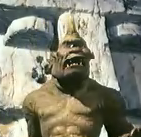
Nice collection of early stop-motion animations by the great Ray Harryhausen.
Arguably, Ray Harryhausen’s creations aren’t the most realistic in the realm of special effects, nor will his films ever join the ranks of cinema’s classics. Yet Ray’s touch can be instantly recognized. His creations are absolutely alive; in each frame his creatures move, twitch, breathe, act with a personality and pathos that can only be ascribed to a direct connection to Ray.
The samples are brief, but quickly raise memories of lazy Sunday afternoons watching TV at cousins’ and friends’ houses in the 1970s, when this flavor of model/miniature animation was already old, but was new to me. Today the line between what’s real and what’s not in cinema is not only blurry, it’s gone. But through most of film history, the line was clear as day, so more suspension of disbelief was required on the part of the viewer. I think there’s something valuable in that. And also something enjoyable.
Update: Video collage of some of Harryhausen’s work (via Weblogsky):
Quick: What’s the most commonly shoplifted item in America? Batteries? Makeup? Candy? According to the Food Marketing Institute, it’s meat. Didn’t used to be. A couple years ago, meat took a back seat to cough medicines, which were often stolen by meth chefs. But when those medicines went behind the counter, meat was promoted to first place. So who’s lifting rib-eye? The occasional kleptomaniac, starving student, or dude on a dare, sure, but the bulk of beef is pilfered by house mums. Slate:
Though men and women shoplift in equal numbers, such aspirational meatlifters are most likely to be gainfully employed women between 35 and 54, according to a 2005 University of Florida study.
So apparently the practice is not only more widespread than I would have thought, but apparently commonly practiced by a demographic I would never have suspected. Which got me thinking: What percentage of Birdhouse readers are clandestine meat poachers?
Robert Anton Wilson, author of the Illuminati trilogy and 32+ other great books on thought, existence, hallucinogens, conspiracy, epistemology, being, etc. died a few days ago from post-polio syndrome. After G. Ford and J. Brown, I was wondering who would complete the triad (don’t great people often die in threes?)
Read a lot of RAW in my early 20s, and he had a big effect on me – he was the anti-philosopher foil to the academic stuff I was immersed in back then. Malcolm points to a fairly obscure piece of his on the difference between religions and cults, In Doubt We Trust. Reading his piece on Doubt reminds me why I liked him, though it feels fresh now.
The function of religions and cults, including the political or ideological ones, is to short-circuit the normal “common sense” process of doubt, investigation, further doubt, further investigation, further doubt, etc. The person with BS* knows the “right answer” at all times and knows it immediately. This makes them very happy, and very annoying since most of their “right answers” don’t make sense to the rest of us. Common sense and/or science require investigation and revision, etc. BS only requires a Rule Book — sacred scripture, Das Kapital or whatever — and a good memory.
* BS = Belief Systems
I’ve been asking people over the past year what they think is the difference between a religion and a cult – turns out to be one of those questions everyone thinks they know the answer to until pressed, at which point definitions crumble to dust. Wilson attaches the notion of religion to money and politics, which make religions part of the social game. Without money or politics, a group remains an out-lier, too formless in the eyes of society to be considered a religion.
Inventor of dynamite and founder of the Nobel Peace Prize, Alfred Nobel:
“My dynamite will sooner lead to peace than a thousand world conventions. As soon as men will find that in one instant, whole armies can be utterly destroyed, they surely will abide by golden peace.”
Secretary of Defense Robert McNamara, 1967:
When calculating the force required, we must be conservative in all our estimates of both a potential aggressor’s capabilities and his intentions. Security depends upon assuming a worst plausible case, and having the ability to cope with it. In that eventuality we must be able to absorb the total weight of nuclear attack on our country — on our retaliatory forces, on our command and control apparatus, on our industrial capacity, on our cities, and on our population — and still be capable of damaging the aggressor to the point that his society would be simply no longer viable in twentieth-century terms. That is what deterrence of nuclear aggression means. It means the certainty of suicide to the aggressor, not merely to his military forces, but to his society as a whole.
The principle of mutually assured destruction didn’t work in the dynamite age. Has it worked in the nuclear age? If so, will it continue to work? And if it doesn’t work … what?
Seems like you can’t shake a stick lately without stumbling on a discussion about “the new atheism.” Kids’ birthday parties, water cooler conversations at work, barbershop, discussion lists. Sparked by the release of new books by Harris, Dawkins, and Dennett, all of a sudden it’s OK to talk about atheism. We’ve had some greatconversations here recently on the subject, but it seems like the topic is bottomless.
In a recent Wired cover story, the state of modern atheism was compared to that of homosexuality slowly emerging from the closet a few decades ago. When pressed, many people who publicly claim agnosticism turn out actually to be atheists afraid of offending the present company. Because to declare yourself an atheist is to say “All that stuff that means more to you than anything, that belief system you hinge your life upon? I reject it entirely.” In other words, it’s not polite to declare yourself an atheist. That’s what the “new atheists” want us to move beyond.
Richard Dawkins, author of The God Delusion, does an amazing job in this BBC interview of summarizing the views of contemporary atheism in ten minutes. Dawkins is extraordinarily well-spoken and charming, though some theists will no doubt find him strident.
Dawkins also has a great essay up on Yahoo: Why There Almost Certainly Is No God. Also worth listening to him describe the stunning predictive capacity of quantum theory to a Christian. If you’ve got an hour to spare, catch NPR’s interview with Dawkins. I found it fascinating and illuminating; a friend found it annoying.
iSquub is struggling with the paradox of feeling agnostic but agreeing with Dawkins’ line of reason:
Still, to me the most gripping part of this discussion keeps boiling down to that one thing: why is he an atheist, and I an agnostic? Why do I care? The god I’m agnostic about makes no perceivable difference in my life, yet I get frustrated when Dawkins uses what is pretty much an identical chain of reasoning to the one I use but suddenly leaps to an entirely different conclusion.
My take is that, for many of us, this is not a matter of being committed to agnosticism, but rather of not being prepared to make a positive statement that it’s insensible to base our personal or political lives on what amounts to myths. When quantuum theory can make predictions about our world with breath-taking accuracy while the story of the Trinity can make none, what are we waiting for? As Harris says, in no other field of human endeavor are we so willing to accept with indifference the possibility that an outrageous claim might have merit (as agnostics are). We’ve accepted agnosticism as safe and non-committal. It’s not impolite to be an agnostic, and agnosticism allows us to walk on the razor’s edge. Why not stand up and say “Fairies aren’t real?”
Perhaps agnosticism is just a “well, maybe” sort of allowance that we give. An allowance we would not allow in any other field of discourse when evidence is shaky.
Information Architects Japan: The Interface of a Cheeseburger, on how Interface = Brand. On how you can have a bad, ugly product and still be successful if you have a great UI. On why the iPod’s logo is on the back of the device, not the front.
The cheeseburger has the easiest food interface one could think of. No forks, no knives, no spoons, no plates, no chopsticks. Like a sandwich, but softer and sweeter and above all: Standardized. No alarms and no surprises when eating a cheeseburger. Almost as simple as “the only intuitive interface†– the nipple. Sandwiches can be complicated at times.
Flash back to the cassette tax of the 80s, when labels assumed that the vast majority of blank cassettes would be purchased to pirate music, and were able to push legislation forcing cassette manufacturers to share proceeds with the labels. Now flash forward to the present:
Universal Music Group refused to license its music to the Zune unless it could receive a percentage of each device sold, in addition to standard music licensing fees for downloads and subscriptions. “These devices are just repositories for stolen music, and they all know it,” UMG chairman/CEO Doug Morris says. “So it’s time to get paid for it.”
In practical or percentage terms, UMG is not entirely wrong – of course most iPods carry pirated content. It’s the presumption of guilt that galls me. In addition to pirated content, iPods/Zunes etc. also carry a huge honkin’ ton of A) Music ripped from people’s own CD collections, B) Music purchased from services like eMusic, iTMS, Rhapsody, etc., C) Podcasts, D) Music provided for free download by bands on MySpace etc. In fact, I’d wager that a much higher percentage of content on the average iPod is legitimate than was on the average cassette tape.
Taken as a whole, that’s a helluva lot of legitimate content, and a whole lot of people being tarred/taxed unfairly with the “pirate” flag.
The night the Amiga was introduced to the world, Andy Warhol used one to paint a portrait of Debbie Harry, like only Warhol could. In the months that followed, Warhol acquired a bunch of Amigas, and used them to create what is/was probably the first digital art film. Never released, You Are The One had been, until recently, only rumored to exist. Artdaily:
Long believed lost, this short masterpiece (20 painted frames) was reconstructed by Arnie Friedhoff and his team at ITN on a retro-fitted Mac G5 and reunited with what is believed to be its original soundtrack (also discovered on another floppy disk marked in Warhol’s familiar scrawl “soundtracks for imaginary movies, i.e., you are the oneâ€. Now, after five years of painstaking archival reconstruction, YOU ARE THE ONE is being debuted for the first time anywhere at the Museum of New Art (MONA).
“However, due to threatened legal action tied to estate disputes and to its pending seizure, the museum will only be allowed a one day screening of the film.”

 Went with Miles yesterday to the exhibition of Bruce Nauman’s 1960s work, A Rose Has No Teeth, at the BAM (the title is a Wittgenstein reference, from the Tractatus: It is false that a goose has teeth, nonsensical that a rose should have teeth; non-intersecting language games yield nonsense, though syntax seduces us into thinking that a logical proposition is concealed in there somewhere).